
Recognizing the signs you need an accident attorney is the difference between a fair settlement and leaving thousands of dollars on the table. A personal injury attorney, the standard legal term for what most people call an "accident attorney," represents victims in claims involving negligence, insurance disputes, and complex liability. Insurance companies evaluate claims knowing that unrepresented victims routinely accept lower offers. The seven signs below give you a clear, specific framework for deciding whether you need legal representation before you make a costly mistake.
1. Signs you need an accident attorney start with serious injuries
Serious injuries are the single most reliable indicator that you need a personal injury attorney on your side. Injuries requiring surgery, hospitalization, or long-term rehabilitation create claims that are far more complex to value than a simple fender-bender. The higher the medical costs, the more aggressively insurers work to minimize what they pay out.
Serious injury cases involve several factors that make attorney representation critical:
- Traumatic brain injuries (TBI), spinal cord damage, or broken bones that require specialist care and extended recovery
- Permanent disability or disfigurement that affects your ability to work and your quality of life
- Future medical costs for ongoing physical therapy, medication, or surgical follow-ups
- Lost earning capacity if your injuries prevent you from returning to your previous job or career
Pro Tip: Watch for delayed symptoms. Whiplash, soft-tissue injuries, and internal bleeding may not appear for 24 to 72 hours after a crash. Accepting a settlement before these symptoms surface means you waive your right to additional compensation.
The inability to quantify total damages including future treatment costs and lost earning capacity is one of the most overlooked reasons to retain legal counsel early. An attorney brings in medical experts and economists to build a complete picture of what your injuries actually cost.

2. The other driver disputes fault or denies responsibility
Disputed liability is one of the strongest indicators for legal representation. When the other driver denies fault or when police reports contain conflicting accounts, insurers gain leverage to reduce or deny your claim entirely. Fault disputes increase insurer leverage and make early legal involvement critical to prevent undervaluation.
Common fault-dispute scenarios that demand attorney involvement include:
- Multi-vehicle accidents where two or more drivers share responsibility and each insurer points at the others
- Conflicting witness statements that contradict your account of how the crash happened
- Comparative fault claims where the insurer argues you were partially responsible, which directly reduces your payout under most state laws
- No police report or an incomplete report that leaves liability ambiguous
An attorney investigates the scene, subpoenas traffic camera footage, consults accident reconstruction experts, and secures witness statements before evidence disappears. Early legal involvement preserves this evidence and protects your rights before the statute of limitations becomes a problem.
3. The insurance company is pressuring you to settle fast
A quick settlement offer from an insurer is not a favor. It is a calculated move to close your claim before the full extent of your injuries is known. Insurers push quick settlements specifically because early offers rarely account for future medical costs, lost wages, or pain and suffering.
Watch for these red flags in insurer behavior:
- A settlement offer within days of the accident before you have completed medical treatment
- Requests for a recorded statement before you have spoken with an attorney, which can be used to minimize your claim later
- Pressure to sign a release of liability that permanently waives your right to future compensation
- Repeated delays in communication designed to frustrate you into accepting a lower offer
Pro Tip: Never give a recorded statement to the opposing insurer without attorney guidance. Anything you say can be used to argue that your injuries are less severe than claimed.
Signing documents too soon risks permanently undervaluing your claim. An attorney handles all insurer communications, neutralizes pressure tactics, and makes sure no release is signed until your medical picture is complete.
4. Your accident involved a commercial vehicle or multiple parties
Crashes involving commercial trucks, company cars, rideshare vehicles, or multiple at-fault drivers are legally different from standard two-car accidents. Commercial vehicle claims involve federal regulations, higher insurance policy limits, and multiple potentially liable parties including the driver, the employer, and the vehicle owner.
The complexity multiplies quickly. A trucking company may carry a $1 million or higher liability policy, but accessing that coverage requires proving violations of Federal Motor Carrier Safety Administration (FMCSA) regulations around driver hours, vehicle maintenance, and cargo loading. Specialist legal knowledge is required to manage these claims effectively. Without it, victims often settle for a fraction of what a commercial policy can actually pay.
Multi-party crashes present a similar challenge. When three or more vehicles are involved, each insurer argues that another party bears greater responsibility. An attorney coordinates the investigation across all parties, prevents any single insurer from shifting blame unfairly, and maximizes your total recovery.
5. You have lost wages or your ability to work is affected
Lost income is a compensable damage in personal injury claims, but it is one of the most frequently undervalued by insurers. If your injuries have kept you from work for more than a few days, or if they affect your ability to perform your job long-term, an attorney is the most reliable way to recover what you are actually owed.
Calculating lost earning capacity requires documentation from your employer, tax records, and often testimony from a vocational expert. Self-employed individuals face an even steeper challenge because their income is harder to document and insurers routinely dispute it. An attorney knows exactly which records to gather and how to present them in a way that holds up in negotiation or at trial.
6. You are unsure whether your state's statute of limitations applies
Every state sets a deadline for filing a personal injury lawsuit, and missing it permanently bars your claim. In Illinois, for example, the personal injury statute of limitations is two years from the date of injury. Most states follow a similar two-year window, though some are shorter for claims against government entities.
If you are approaching the one-year mark after your accident and have not resolved your claim, consult an attorney immediately. The deadline applies even if you are still in active treatment or negotiating with an insurer. An attorney files the necessary paperwork to preserve your rights and keeps the case moving within the legal timeframe.
7. When you might not need an attorney vs. when you definitely do
Not every accident requires legal representation. Understanding the difference saves time and helps you make the right call.
You likely do not need an attorney when:
- The accident was minor, fault is clear, and the other driver's insurer accepts liability without dispute
- Your injuries are limited to minor soreness that resolves within a week with no medical treatment
- The total property damage and medical costs are low enough that legal fees would consume most of any recovery
You definitely need an attorney when:
| Factor | Attorney needed? |
|---|---|
| Serious injury requiring surgery or hospitalization | Yes, without exception |
| Disputed fault or conflicting police reports | Yes, immediately |
| Insurer pressuring quick settlement or recorded statement | Yes, before responding |
| Commercial vehicle or rideshare involved | Yes, due to regulatory complexity |
| Lost wages or long-term earning capacity affected | Yes, to document and recover income |
| Minor fender-bender, clear fault, no injuries | Likely not required |
Even in seemingly minor cases, delayed symptoms can change the picture. Understanding your rights after an accident helps you recognize when a case that started simple has crossed into territory where legal counsel is the right move. Most personal injury attorneys offer free consultations, and contingency fee arrangements mean you pay nothing unless you win, typically 33% to 40% of the recovery. That structure removes the financial barrier to getting a professional opinion.
Key takeaways
Recognizing the signs you need an accident attorney early protects your evidence, your rights, and your maximum possible compensation before insurers close the door on your claim.
| Point | Details |
|---|---|
| Serious injuries demand counsel | Surgery, hospitalization, or long-term care create claims too complex to handle alone. |
| Disputed fault shifts leverage to insurers | An attorney investigates and secures evidence before it disappears. |
| Quick settlement offers are a red flag | Early offers rarely cover future medical costs or lost earning capacity. |
| Commercial crashes require specialist knowledge | Federal regulations and multi-party liability require dedicated legal handling. |
| Contingency fees remove financial barriers | Most personal injury attorneys charge 33% to 40% only if you win. |
What I've learned after watching too many victims settle too soon
I co-founded Accident Survival Guide after going through a serious accident myself, and the single pattern I see most often is this: people wait too long. They assume the insurance process will be fair. They accept the first offer because they need the money now and the process feels overwhelming. By the time they realize the settlement does not cover their ongoing treatment, the release has been signed and the claim is closed.
The other mistake I see constantly is people dismissing their case as "not serious enough" for an attorney. A soft-tissue injury that seems minor in week one can become a chronic condition requiring years of treatment. An accident that looks like clear fault can turn into a disputed claim the moment the other driver changes their story. The first 24 hours after a crash set the foundation for everything that follows, and most people do not know what to document or what not to say.
My honest advice: if you are reading this article, your situation probably warrants at least a free consultation with a personal injury attorney. The consultation costs you nothing. The information you get from it is worth far more than the hour it takes. Choose an attorney who specializes specifically in car accident and personal injury cases, not a general practice lawyer who handles accidents on the side. Specialization matters because these attorneys know the insurer tactics, the local courts, and the medical experts who make the difference between a fair settlement and a lowball one.
— Scott
How Accident Survival Guide helps after a crash
Accident Survival Guide was built specifically for moments like this one. When you are trying to figure out whether you need legal help, what to say to an insurer, or how to document your injuries correctly, the right information at the right time changes everything.
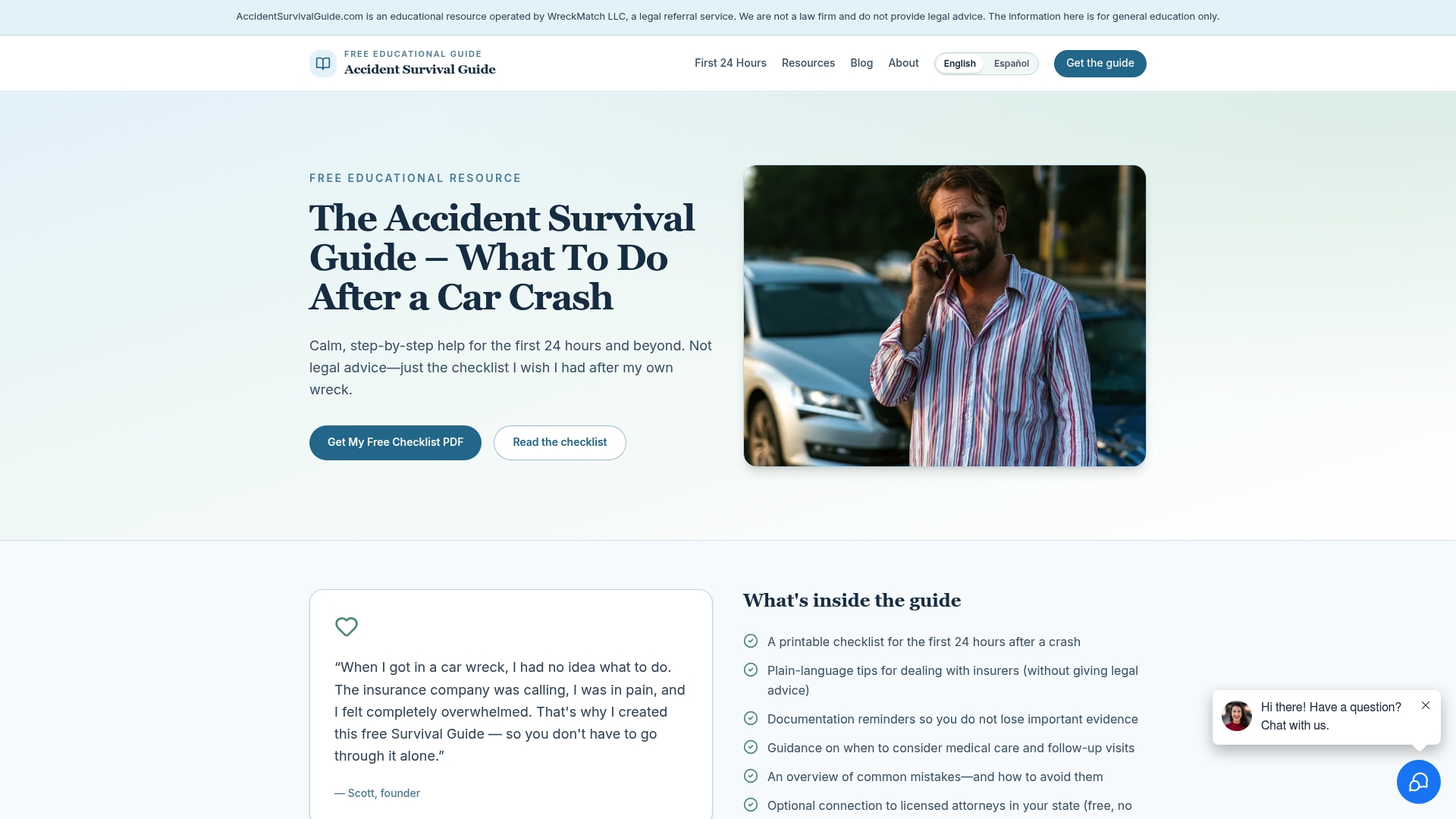
The Accident Survival Guide provides free, state-specific resources covering insurance tactics, evidence preservation, medical documentation, and legal rights. Whether you were in a car, truck, motorcycle, or rideshare accident, the platform connects you with experienced legal professionals nationwide at no upfront cost. If you are in Texas, the Texas accident guide walks you through the specific steps and legal considerations for your state. Do not navigate the insurance process alone when free expert guidance is available.
FAQ
What are the clearest signs you need an accident attorney?
The clearest signs are serious injuries requiring medical treatment, disputed fault, insurer pressure to settle quickly, and accidents involving commercial vehicles or multiple parties. Any one of these factors justifies a free consultation with a personal injury attorney.
Do I need a lawyer for a minor car accident?
Not always. If fault is clear, injuries are minimal, and the insurer accepts liability without dispute, you may be able to handle the claim yourself. However, delayed symptoms can change a minor case into a significant one, so monitor your health closely for at least 72 hours.
How much does a personal injury attorney cost?
Most personal injury attorneys work on a contingency fee basis, meaning you pay nothing upfront. Fees typically range from 33% to 40% of the final recovery, and you owe nothing if the case is not won.
When is it too late to hire an accident attorney?
The deadline is set by your state's statute of limitations, which is two years from the injury date in most states. Missing this deadline permanently bars your claim, so contact an attorney well before that window closes.
What should I do before my accident attorney consultation?
Gather your police report, medical records, photos of the scene and injuries, and any insurer correspondence before your consultation. The more documentation you bring, the more accurately an attorney can assess your case and advise on next steps.