
Car accident legal rights are your legally protected ability to seek compensation and hold a negligent driver accountable after a crash. These rights exist whether you file an insurance claim, negotiate a settlement, or take your case to court. Understanding them before you speak with any insurance company is the difference between a fair recovery and a costly mistake. This guide covers compensation types, the claims process, state fault rules, filing deadlines, and the special situations that trip up passengers and uninsured drivers.
What compensation can you seek after a car accident?
Compensable damages fall into two categories: economic losses you can document with receipts and records, and non-economic losses tied to your physical and emotional experience. Both are legally recoverable, but the amounts depend heavily on how well you document them from day one.
Economic damages include:
- Medical expenses: Emergency room visits, surgeries, physical therapy, prescription medications, and any future treatment costs tied to the accident
- Lost income: Wages you missed while recovering, plus reduced earning capacity if your injuries affect your ability to work long-term
- Property damage: Repair or replacement costs for your vehicle and any personal belongings destroyed in the crash
Non-economic damages cover pain and suffering, emotional distress, and loss of enjoyment of life. These are harder to quantify, but courts and insurers use formulas based on injury severity and recovery time to assign dollar values. A broken leg that heals in six weeks produces a very different number than a spinal injury requiring two years of treatment.
Permanent or long-term injuries open the door to additional compensation categories, including ongoing care costs and loss of future earnings. A 35-year-old who loses partial use of their dominant hand faces decades of reduced income. That projection belongs in your claim from the start.
Pro Tip: Keep every receipt, every medical bill, and every pay stub showing missed work in a single folder, physical or digital. A single, organized injury file with all medical and repair documents is critical for negotiation and gives your attorney or adjuster everything needed to build the strongest possible number.
How do insurance claims and lawsuits work in accident cases?
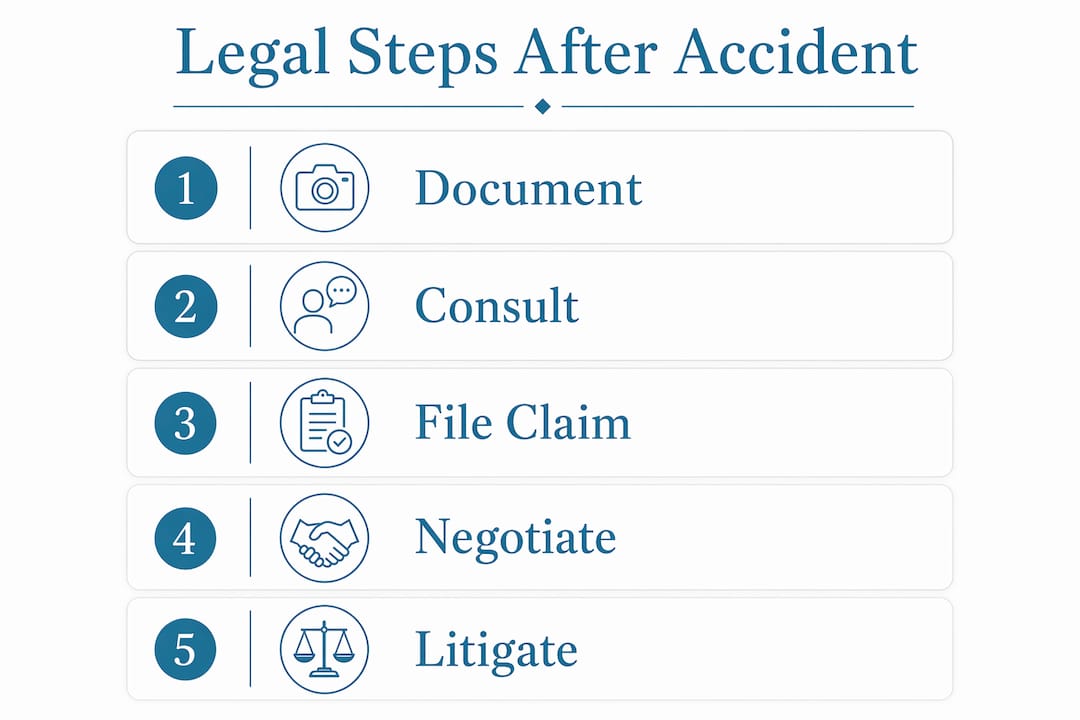
Most car accident compensation begins with an insurance claim, not a lawsuit. The typical sequence runs like this:
- File the claim. Notify the at-fault driver's insurer and your own carrier as soon as possible after the accident. Delays give adjusters grounds to question the severity of your injuries.
- Document your losses. Gather police reports, medical records, repair estimates, and photos of the scene. The strength of your claim is directly proportional to the quality of your documentation.
- Negotiate with the adjuster. Insurance adjusters work for the insurer, not for you. Their opening offer is almost always lower than what your documented losses justify. Counter with evidence.
- Evaluate any settlement offer. Before signing anything, confirm the offer covers all current and anticipated future costs. Accepting a settlement closes your claim permanently.
- File a lawsuit if negotiations fail. If the insurer refuses a fair offer, a personal injury attorney can file suit in civil court. Most cases still settle before trial, but the threat of litigation often moves negotiations forward.
One step that catches many accident victims off guard is the recorded statement request. You are generally not required to give a recorded statement to the at-fault driver's insurer. Adjusters use these statements to find inconsistencies that reduce your payout. Refusing should not automatically deny your claim, but the situation is more complicated with your own insurer, where policy cooperation clauses may apply.
Pro Tip: Before responding to any recorded statement request, consult a personal injury attorney. Declining recorded statements can trigger cooperation clause disputes with your own carrier, and an attorney can help you respond in a way that protects your rights without violating your policy.

Early legal advice also matters because attorneys identify damages you may not think to claim, such as rental car costs, mileage to medical appointments, and home care expenses during recovery.
How does fault affect your legal rights across different states?
Your state's fault rules determine whether you can collect compensation at all, and how much you can recover if you share some blame for the crash. Two systems dominate American law: comparative negligence and contributory negligence.
| Fault system | How it works | Example states | Effect on recovery |
|---|---|---|---|
| Pure contributory negligence | Any fault on your part bars all recovery | Virginia, Maryland, Alabama | Even 1% fault eliminates your claim |
| Modified comparative negligence (51% bar) | You recover if you are 50% or less at fault; recovery reduced by your percentage | Texas, Georgia, Colorado | 20% fault reduces a $100,000 award to $80,000 |
| Pure comparative negligence | You recover regardless of fault percentage; award reduced proportionally | California, New York, Florida | 80% at fault still yields 20% of damages |
Virginia uses pure contributory negligence, meaning even 1% of fault assigned to you can bar all compensation. That is one of the harshest standards in the country, and it makes early legal advice in Virginia especially critical. If you were in a crash there, read the Virginia accident guide before speaking with any insurer.
Texas applies modified comparative negligence with a 51% bar. If you are found 20% at fault for a crash worth $100,000 in damages, you collect $80,000. Cross the 51% threshold and you collect nothing. Knowing which system your state uses before negotiations begin is not optional. It shapes every number on the table.
What deadlines apply to your legal claims after an accident?
The statute of limitations is the legal deadline for filing a personal injury lawsuit after a car accident. Miss it and you permanently lose the right to pursue compensation in court, regardless of how strong your case is. No exception, no extension, no second chance.
| State | Personal injury deadline | Property damage deadline | Notes |
|---|---|---|---|
| California | 2 years | 3 years | Discovery rule may extend for delayed injuries |
| Texas | 2 years | 2 years | Clock starts at accident date |
| New York | 3 years | 3 years | Government vehicle claims: 90-day notice required |
| Virginia | 2 years | 5 years | Pure contributory negligence state |
| Florida | 2 years | 4 years | Changed from 4 years in 2023 |
Statutes of limitations vary by state from as short as one year to as long as six years, but the most common window for personal injury claims is two to three years. Several important exceptions exist. Minors typically have until their 18th birthday plus the standard filing period. Claims against government-owned vehicles often require a formal notice of claim within 60 to 180 days of the accident. The discovery rule applies when injuries are not immediately apparent, starting the clock from the date you knew or reasonably should have known about the injury.
The insurance reporting deadline is a separate and earlier obligation. Most policies require you to report an accident within days or weeks, not years. Missing that internal deadline can give your own insurer grounds to deny coverage even if the legal filing window is still open.
Pro Tip: Write the statute of limitations deadline for your state on a calendar the week of your accident. Then set a reminder six months before that date. Waiting until the last month to find an attorney puts you at a serious disadvantage in negotiations.
What special considerations apply to passengers and uninsured drivers?
Passengers occupy one of the strongest legal positions after a car accident. Passenger liability is generally minimal because passengers rarely contribute to the cause of a crash. This means you can typically file claims against the at-fault driver without the fault-reduction complications that drivers face.
The complexity for passengers comes from identifying which insurance policy to file against first:
- The at-fault driver's liability coverage is the primary source
- The driver of the vehicle you were riding in may also carry coverage that applies
- Your own auto insurance policy may include medical payments coverage or uninsured motorist protection even when you were not driving
- Health insurance can cover immediate medical costs while the liability claim is resolved
Filing under the wrong policy can delay your claim by weeks or months. An attorney or a resource like Accidentsurvivalguide can help you map the correct filing order before you submit anything.
Uninsured and underinsured motorist coverage protects you when the at-fault driver carries no insurance or not enough to cover your losses. This coverage is part of your own policy and is worth reviewing before you ever need it. In states where uninsured drivers make up a significant share of the road, this protection is not optional. If the at-fault driver is uninsured, your claim shifts to your own carrier, which changes the negotiation dynamic entirely.
Key takeaways
Knowing your legal rights after a car accident requires understanding compensation categories, your state's fault rules, filing deadlines, and the insurance claim process before you make any decisions.
| Point | Details |
|---|---|
| Compensation categories | Economic and non-economic damages both apply; document everything from day one. |
| State fault rules matter | Virginia bars all recovery at 1% fault; Texas cuts recovery proportionally up to 50%. |
| Statutes of limitations | Most states allow 2 to 3 years to file; missing the deadline permanently ends your case. |
| Recorded statements | You are generally not required to give one to the at-fault insurer; consult an attorney first. |
| Passenger rights | Passengers face minimal fault exposure and can access multiple insurance policies. |
What I've learned from watching people navigate this the hard way
I built Accidentsurvivalguide with Kathy Carr because we both went through serious accidents and made expensive mistakes that nobody warned us about. The biggest one was not understanding that the insurance adjuster calling us within 48 hours was not there to help. They were there to gather information that would reduce the payout.
The conventional wisdom says "just be honest and cooperative." That advice is incomplete. Being honest is non-negotiable. Being cooperative with the at-fault driver's insurer before you understand your rights is a different matter entirely. Early medical documentation is the single most important thing you can do in the first week. Gaps between the accident date and your first medical visit are the first thing adjusters use to argue your injuries were not caused by the crash.
What most articles skip is the psychological pressure of the process. Insurers move fast because they know injured people are stressed, in pain, and often desperate for cash. A settlement offer that arrives while you are still in the hospital feels like relief. It is usually a fraction of what you are owed. The first 24 hours after a crash set the trajectory for everything that follows. Treat them accordingly.
My honest advice: consult a personal injury attorney before you accept any offer or give any recorded statement. Most offer free consultations. The cost of that conversation is zero. The cost of skipping it can be tens of thousands of dollars.
— Scott
How Accidentsurvivalguide helps you protect your rights
Accidentsurvivalguide was built specifically for the moment you are in right now. The platform provides free, plain-language guidance on medical documentation, insurance tactics, evidence preservation, and legal rights so you can make informed decisions before any insurer gets your statement.
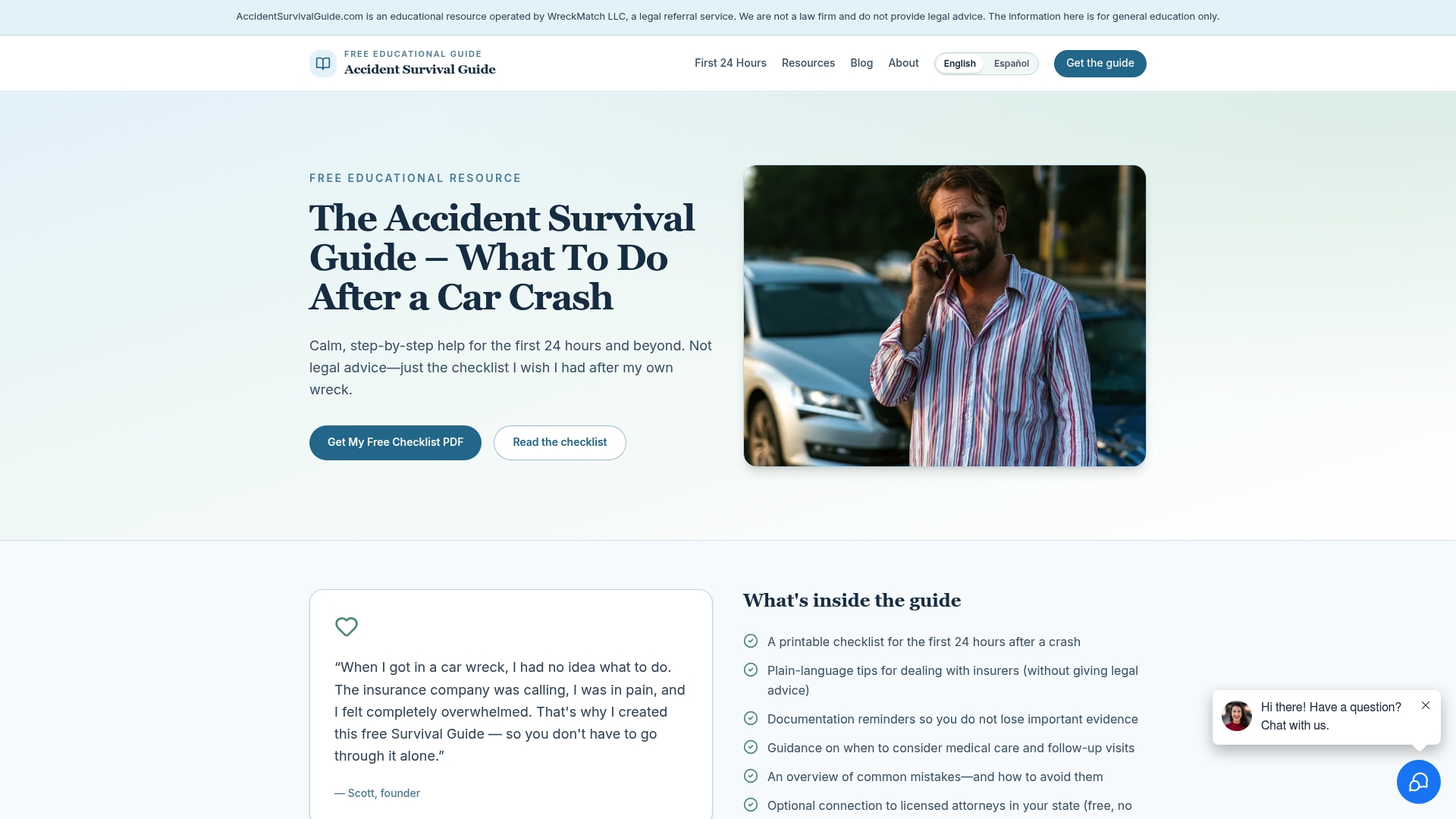
The site includes state-specific guides for Texas, Oregon, Virginia, and more, because your rights depend heavily on where the accident happened. Whether you need to understand Texas fault rules or find a trusted attorney in your area, Accidentsurvivalguide connects you with the resources and professionals who can protect your claim. Visit AccidentSurvivalGuide.com to access free tools, guides, and legal referrals built for accident victims nationwide.
FAQ
What are my legal rights after a car accident?
Your legal rights after a car accident include the right to seek compensation for medical expenses, lost wages, property damage, and pain and suffering through an insurance claim or personal injury lawsuit. These rights apply whether you were a driver or a passenger.
How long do I have to file a car accident claim?
Deadlines vary by state from one to six years, with most states setting a two to three year window for personal injury claims. Missing this deadline permanently bars you from pursuing compensation in court.
Does my fault in the accident affect my compensation?
Yes. States use either comparative negligence or contributory negligence rules. In Texas, being 20% at fault reduces your recovery by 20%. In Virginia, any fault at all can eliminate your claim entirely.
Do I have to give a recorded statement to the insurance company?
You are generally not legally required to give a recorded statement to the at-fault driver's insurer. Consult a personal injury attorney before agreeing to any recorded statement, as your words can be used to reduce your payout.
What if the other driver has no insurance?
Your own uninsured motorist coverage steps in when the at-fault driver carries no insurance or insufficient coverage. Review your policy limits and file a claim with your own carrier, keeping in mind that the negotiation dynamic shifts when you are dealing with your own insurer.