
Most people assume a commercial vehicle accident claim is just about covering their medical bills. That assumption costs victims thousands of dollars every year. The full picture of damages commercial vehicle accident victims can recover is far broader than a hospital invoice. In legal terms, these recoverable losses fall under "compensatory damages," a category that covers everything from lost income to psychological trauma. Understanding the complete scope of what you can claim, and how the commercial trucking system's unique liability structure affects your payout, is the single most important factor in getting fair compensation after a crash.
Table of Contents
- Key takeaways
- 1. Economic damages victims commonly face
- 2. Non-economic damages and why they matter
- 3. Legal and insurance factors that shape your recovery
- 4. Practical steps to protect your claim from day one
- My take on what victims consistently get wrong
- How Accidentsurvivalguide can help you after a commercial vehicle accident
- FAQ
Key takeaways
| Point | Details |
|---|---|
| Damages go beyond medical bills | Victims can claim lost wages, future care, pain and suffering, and property loss in addition to hospital costs. |
| Commercial policies carry higher limits | Trucking insurance limits can reach $1,000,000 compared to $25,000 minimums for private drivers, enabling larger recoveries. |
| Multiple parties may be liable | Trucking companies, employers, and vehicle owners can all share fault, increasing total compensation available. |
| Deadlines are strict | Most personal injury claims must be filed within two to four years depending on jurisdiction. Missing them forfeits your rights. |
| Early legal help protects your claim | Evidence disappears fast after commercial accidents. An attorney hired early preserves the proof that drives higher settlements. |
1. Economic damages victims commonly face
Economic damages are the financial losses you can document with receipts, pay stubs, and invoices. In commercial vehicle accident claims, these amounts are often substantial because the injuries tend to be severe.
The most common economic losses include:
- Medical expenses: Emergency care, surgery, hospitalization, rehabilitation, prescription medications, and all projected future treatments. Catastrophic injury cases can generate medical costs that last a lifetime.
- Lost wages: Every paycheck missed while you recovered counts. If your injuries permanently reduce your ability to work, you can also claim loss of earning capacity.
- Property damage: Repair or replacement of your vehicle and any personal property destroyed in the crash.
- Out-of-pocket costs: Transportation to medical appointments, home modifications for disabilities, and hired help for tasks you can no longer perform.
Settlement amounts correlate with injury severity, with soft tissue injuries typically settling between $75,000 and $300,000, major surgeries between $300,000 and $1,000,000, and catastrophic injuries exceeding $1,000,000.
One factor many victims overlook is the "payment stack." Your medical bills may initially be covered by Personal Injury Protection, MedPay, your health insurer, or even Medicaid. However, PIP and MedPay subrogation can trigger reimbursement claims against your final settlement, meaning those insurers want their money back before you see a check. Understanding this structure matters when negotiating.

Pro Tip: Keep every receipt, explanation of benefits, and medical record from day one. Documenting out-of-pocket costs in real time, not weeks later from memory, produces significantly stronger claims.
2. Non-economic damages and why they matter
Non-economic damages are the losses that don't come with a receipt. They're harder to quantify, but in serious commercial vehicle accident cases, they often represent the largest portion of a final award.
- Pain and suffering: Physical pain from injuries, surgeries, and ongoing treatment.
- Emotional distress: Anxiety, PTSD, depression, and fear of driving that follow a violent crash.
- Loss of enjoyment of life: Losing the ability to play with your children, pursue hobbies, or perform daily activities you once took for granted.
- Permanent disability and disfigurement: Visible scarring or loss of function that affects how you live and how others perceive you.
- Psychological trauma: Some victims require years of mental health treatment. Those costs and the suffering behind them are compensable.
Attorneys and insurers use two primary methods to assign dollar values to these losses. The multiplier method multiplies your total economic damages by a number between 1.5 and 5, depending on severity. The per diem method assigns a daily dollar rate to your suffering and multiplies it by the number of days you have lived with the injury. Neither formula is law, but both give negotiations a starting point. Your legal rights after a crash include the right to claim all of these non-economic losses, not just the categories an insurance adjuster chooses to mention.
3. Legal and insurance factors that shape your recovery
This is where commercial vehicle accident claims get genuinely different from a standard car accident. Several legal doctrines and coverage structures either expand or limit what you can actually collect.
- Respondeat superior: Trucking companies are legally responsible for negligent acts their drivers commit while on the job. This means you may have a claim against a corporation with far deeper pockets than the individual driver.
- Negligent hiring and retention: If a company hired a driver with a disqualifying history or kept a dangerous driver on the road, cases with early investigation into all responsible parties consistently produce higher settlements.
- Federal trucking regulations: Commercial carriers must comply with Federal Motor Carrier Safety Administration rules covering hours of service, vehicle maintenance, and driver qualifications. Violations become powerful evidence of negligence.
- Insurance policy limits: New York's commercial limits can reach $1,000,000 compared to a private driver minimum of $25,000. Higher limits mean more room for full compensation, but those limits still cap what you can collect regardless of your actual damages.
- Statutes of limitations: Utah personal injury claims carry a four-year limit, while wrongful death claims typically allow two years. Every state sets its own clock. Miss it, and your claim is gone permanently.
Here is a quick comparison of how commercial vehicle coverage differs from what you face in a standard private auto claim:
| Factor | Private auto policy | Commercial trucking policy |
|---|---|---|
| Minimum liability limit | $25,000 (varies by state) | $750,000 to $1,000,000+ (federal minimum for large trucks) |
| Employer liability | Rarely applies | Respondeat superior applies in most on-duty crashes |
| Additional defendants | Driver only | Driver, carrier, owner, shipper, maintenance contractor |
| Regulatory violations | Not applicable | FMCSA violations can establish negligence per se |
In high-stakes cases, exceeding policy limits is sometimes possible. Strategies for recovering beyond policy limits include pursuing umbrella coverage, identifying multiple liable parties, or proving bad faith claims handling by the insurer.
Pro Tip: Request the trucking company's full insurance declaration page as soon as litigation begins. Carriers sometimes carry excess or umbrella policies that dramatically increase total available coverage.
4. Practical steps to protect your claim from day one
The decisions you make in the days after a commercial vehicle crash directly determine how much compensation you recover. Here is what actually matters:
- Seek medical care immediately. Even if you feel fine, some injuries appear hours or days later. A gap in treatment gives insurers grounds to argue your injuries weren't serious or weren't caused by the crash.
- Document everything. Photograph your vehicle, the scene, road conditions, the commercial vehicle's markings, and your visible injuries. Write a detailed account of the crash while your memory is fresh.
- Understand your interim payment options. PIP and MedPay coverage can cover immediate medical bills before any liability settlement is reached. If you live in a no-fault state, this coverage activates regardless of who caused the crash.
- Avoid recorded statements. Trucking company insurers are experienced at using early recorded statements to minimize payouts. You are not legally required to give one to the other party's insurer.
- Watch for lowball offers. Early settlement offers from commercial carriers are almost never the full value of your claim. Accepting one closes your case permanently. Learn the insurance pitfalls in your state before signing anything.
- Hire an attorney with commercial vehicle experience. Truck accident cases involve black box data, driver logs, maintenance records, and federal regulations that a generalist may miss entirely. An attorney who specializes in these cases knows what to subpoena and how fast the evidence disappears.
- Preserve evidence before it's gone. Commercial vehicles carry Electronic Control Module (ECM) data that records speed, braking, and engine activity. That data can be overwritten within days. A legal hold letter sent early in the process demands its preservation.
A Texas jury awarded $49 million in a wrongful death truck verdict, with 65% of damages assigned to the trucking company. Cases like this don't happen by accident. They are built on thorough early investigation and experienced legal strategy.
My take on what victims consistently get wrong
I've watched too many people walk away from commercial vehicle crashes with settlements that didn't come close to covering their real losses. And almost every time, the same pattern shows up.
The biggest mistake isn't accepting a low offer outright. It's underestimating the total damages before negotiations even begin. Victims focus on the bills sitting in front of them and forget about what comes next: future surgeries, long-term therapy, the career they can't return to, the activities they've permanently lost. By the time those costs become real, their case is already closed.
The second mistake is treating commercial vehicle claims like standard car accident cases. They aren't. The liability exposure in a wrongful death or catastrophic injury claim involving a carrier can be orders of magnitude larger than what a private driver's policy covers. Specialized legal counsel isn't a luxury in these cases. It's the difference between a settlement that changes your life and one that barely covers your immediate costs.
In my experience, the victims who recover the most are those who moved fast, documented everything, and hired an attorney before talking to any insurance company. That sequence matters. Every day of delay is a day evidence can disappear and insurers can build their defense.
— Scott
How Accidentsurvivalguide can help you after a commercial vehicle accident
Getting hit by a commercial vehicle is one of the most financially and emotionally complex situations you can face. Accidentsurvivalguide was built specifically to help you understand what comes next.
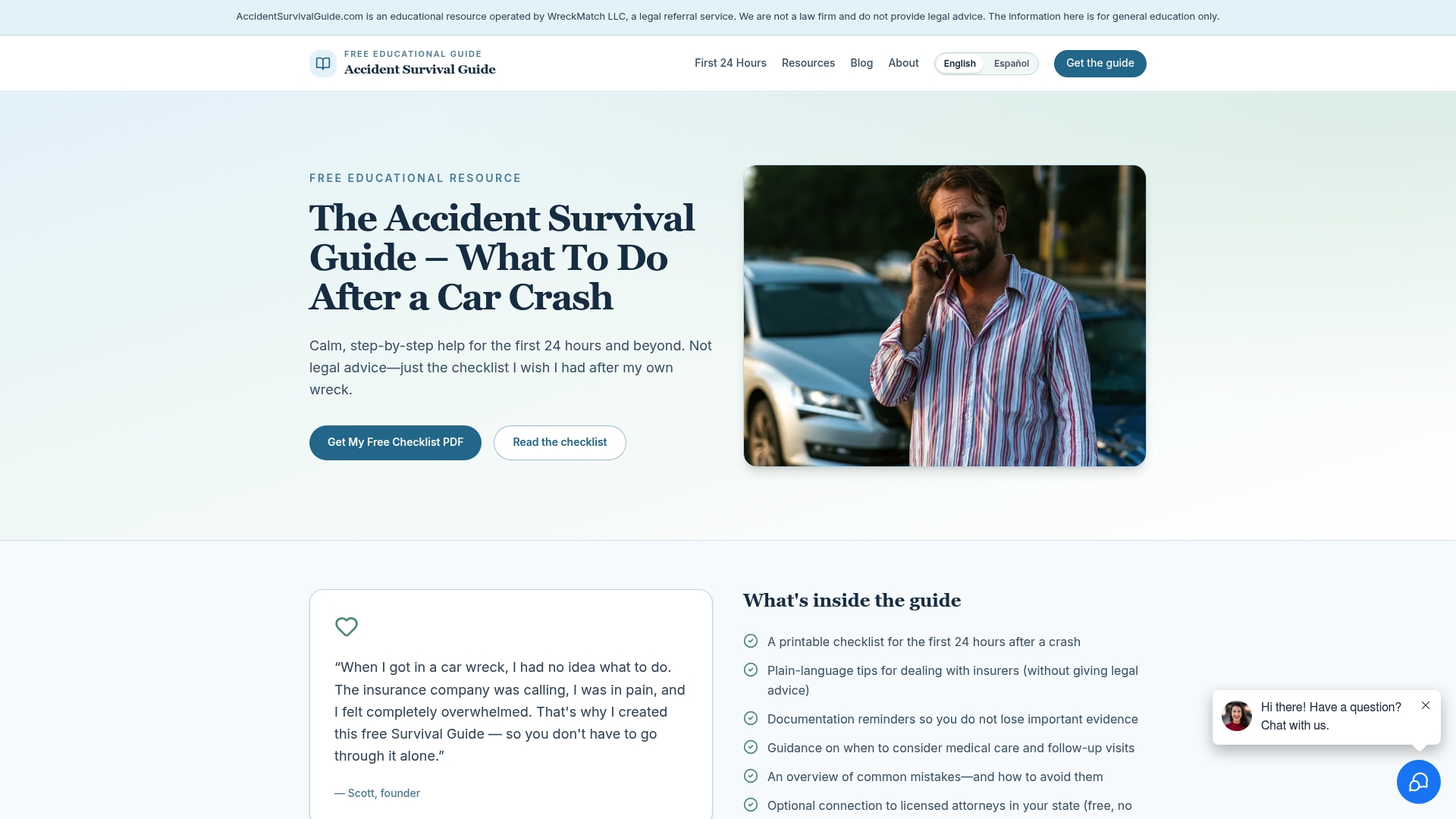
At AccidentSurvivalGuide.com, you'll find free, plain-language resources covering post-accident steps, insurance tactics to watch for, evidence preservation, medical payment options, and how to connect with experienced legal professionals nationwide. Whether you're trying to understand your rights or avoid a costly mistake with an insurer, the guides there are designed to give you a real advantage when it matters most.
FAQ
What types of damages can commercial vehicle accident victims claim?
Victims can claim economic damages such as medical expenses, lost wages, and property damage, as well as non-economic damages including pain and suffering, emotional distress, and loss of enjoyment of life. In cases involving gross negligence, punitive damages may also be available.
How much is a commercial vehicle accident claim worth?
Settlements for commercial vehicle injuries vary widely based on injury severity, insurance limits, and liability. Soft tissue cases typically range from $75,000 to $300,000, while catastrophic injuries can exceed $1,000,000.
How long do I have to file a commercial vehicle accident claim?
Deadlines vary by state. Most personal injury claims must be filed within two to four years of the accident date. Wrongful death claims often carry shorter deadlines. Missing the deadline permanently bars your right to compensation.
Does the trucking company's insurance pay more than a private driver's?
Yes. Commercial trucking policies carry significantly higher minimums than private auto policies. Federal law requires most large commercial carriers to maintain at least $750,000 in liability coverage, with many policies reaching $1,000,000 or more.
Should I accept the first settlement offer from a trucking company's insurer?
No. Early offers rarely reflect the full value of your claim, including future medical costs and non-economic losses. Consult an attorney experienced in commercial vehicle accident claims before accepting or signing anything.