
When you're hit by a delivery truck, semi, or any commercial vehicle, the instinct is to focus on the driver. But employer liability for commercial crash victims is often where the real legal weight lands. Employers can carry far more financial exposure than any individual driver, and knowing whether that liability applies to your situation could be the difference between a modest settlement and one that actually covers your losses. This guide walks you through exactly when and how employer responsibility attaches in commercial vehicle accidents, what evidence matters most, and what steps protect your claim from the start.
Table of Contents
- Key takeaways
- 1. Key legal criteria for employer liability in commercial crash cases
- 2. Different types of employer liability affecting commercial crash victims
- 3. Critical evidence and investigative approaches to prove employer liability
- 4. Comparing employer liability scenarios in commercial crash cases
- 5. Practical steps commercial crash victims should take
- What I've learned about proving employer liability the hard way
- How Accidentsurvivalguide can help you move forward
- FAQ
Key takeaways
| Point | Details |
|---|---|
| Respondeat superior is not automatic | Employer liability applies only when the driver was acting within the scope of employment at crash time. |
| Direct liability goes beyond the driver | Employers can face separate claims for negligent hiring, training, vehicle maintenance failures, and fatigue violations. |
| ELD data is your strongest evidence | Electronic logging device records create a time-stamped trail that proves hours-of-service violations and driver fatigue. |
| Brokers can now be sued too | A 2026 Supreme Court ruling allows negligent hiring suits against freight brokers under state law when safety failures are proven. |
| Preserve evidence immediately | ELD logs, dashcam footage, and dispatch records can be deleted quickly. Acting fast protects your claim. |
1. Key legal criteria for employer liability in commercial crash cases
The foundational rule in commercial vehicle accident liability is called respondeat superior, which translates roughly to "let the employer answer." Under this doctrine, employers are liable when their driver was acting within the scope of employment at the time of the crash. If the driver was hauling goods, making deliveries, or performing any job-related task, the employer is generally on the hook.
That phrase "scope of employment" is where things get contested. Employers routinely argue the driver was on a personal detour, an unauthorized side trip, or otherwise acting outside work duties. Courts examine the full picture, including dispatch logs, route data, and the nature of the driver's assigned task.
A few criteria courts consistently examine:
- Whether the driver was an employee or independent contractor (contractors typically reduce employer exposure, but not always)
- Whether the employer owned or controlled the vehicle
- Whether the driver was performing a task the employer benefited from at the time of the crash
- Whether the employer gave permission for the vehicle to be used
One doctrine often overlooked is the dangerous instrumentality doctrine, applied in states like Florida. Under this rule, vehicle owners face liability simply by giving permission to operate their vehicle, even if the driver is an independent contractor acting outside normal job duties. Ownership plus permission equals potential liability.
In 2026, the U.S. Supreme Court issued a ruling in Montgomery v. Caribe Transport II that significantly expanded the legal landscape. The Court held that freight brokers can face negligent hiring suits under state law despite federal preemption arguments. This decision matters because freight brokers were previously considered insulated from liability in most jurisdictions.
Pro Tip: If the employer claims the driver was an independent contractor, don't accept that at face value. Courts look at the actual working relationship, not just what a contract says.
2. Different types of employer liability affecting commercial crash victims
Vicarious liability through respondeat superior is only one piece of what an employer can face. Direct employer liability is a separate and often more powerful claim, and it doesn't require proving the driver's negligence was connected to a specific job task.
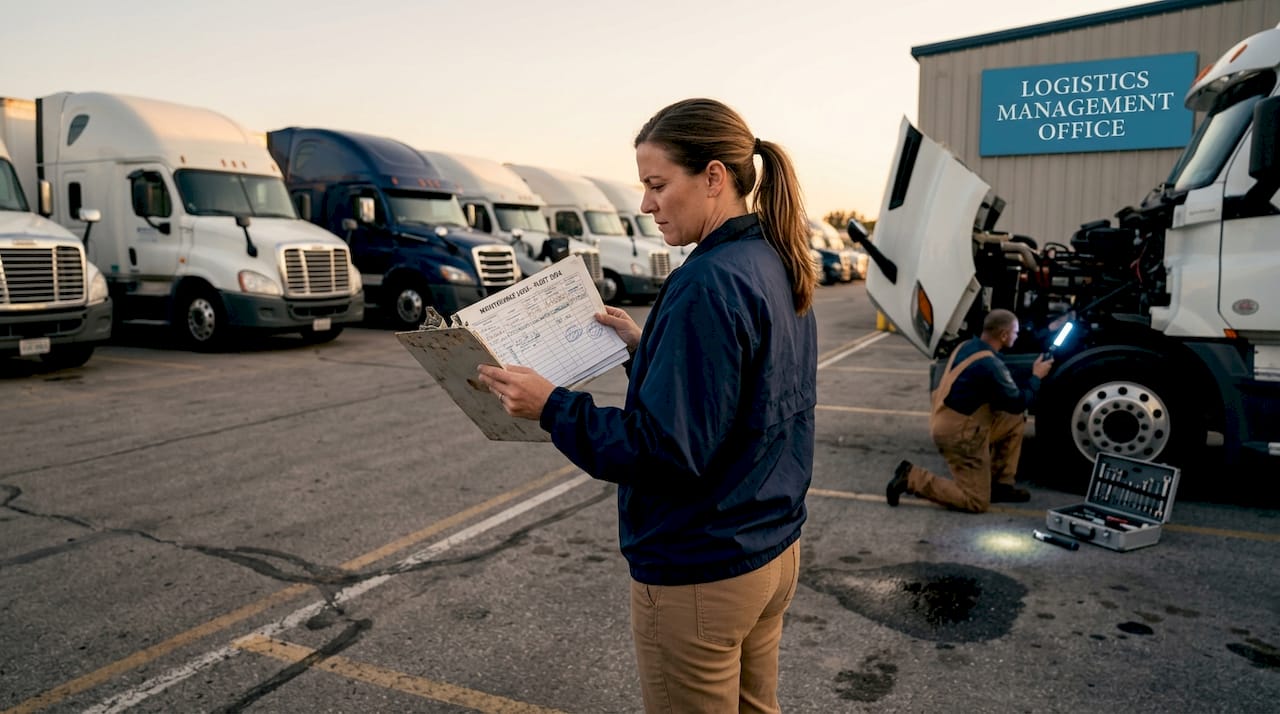
Employers face direct liability for failures in hiring, training, supervision, and vehicle maintenance, completely independent of what the driver did wrong. This matters to you as a victim because it gives you an additional legal angle that's often harder for employers to dismiss.
Here are the most common forms of direct employer liability in commercial crash cases:
- Negligent hiring: The employer failed to run proper background checks, ignored a history of traffic violations, or skipped required federal driver qualification checks before putting a driver behind the wheel
- Negligent training: The driver was inadequately trained on vehicle operation, load securement, or safety protocols specific to the vehicle type
- Negligent supervision: The employer knew about unsafe driving behaviors or prior incidents and failed to act
- Vehicle maintenance failures: Inspections were skipped, mechanical problems were reported and ignored, or the vehicle was placed back in service despite known defects
- Hours-of-service violations: The employer pressured drivers to push past legal driving limits, creating a foreseeable fatigue risk
Negligent hiring claims require examining whether the employer conducted background checks, verified driver qualifications, and enforced federal safety standards. Trucking companies must investigate driver history, medical certification, and drug testing records before placing a driver on the road.
These direct liability claims are significant because they often reveal a pattern of disregard for safety, not just a single bad decision. A jury responds very differently to evidence of ongoing systemic failures compared to a single moment of driver error.
3. Critical evidence and investigative approaches to prove employer liability
Evidence in commercial crash cases lives in places that most victims don't know to look. The driver's recollection and the police report are just the starting point. The real proof is electronic, documented, and often time-sensitive.
Here's a structured approach to building the evidence you need:
- Request ELD data immediately. Electronic logging devices record every hour a commercial driver is operating, resting, or on duty. ELD records create time-stamped logs that verify whether the driver complied with hours-of-service rules before the crash. Fatigue caused by violations is a direct employer liability issue.
- Obtain maintenance and inspection records. Every commercial vehicle is required to undergo regular inspections. If a mechanical failure contributed to the crash, these records will show whether the issue was known and ignored.
- Pull dispatch, GPS, and fuel records. Reconstructing routes via dispatch and GPS data is the most reliable method to confirm the driver was on a work-related trip. Fuel receipts add another layer of corroboration.
- Collect dashcam and surveillance footage. Commercial vehicles increasingly carry forward and rear-facing cameras. This footage often disappears within 72 hours if not preserved through a formal legal hold demand.
- Review the employment file. Prior complaints, disciplinary records, training completion logs, and drug test results all speak directly to employer negligence in hiring and supervision.
Pro Tip: Send a spoliation letter to the employer's legal team as soon as possible after the crash. This formally demands evidence preservation and puts them on notice that destruction of records could be sanctioned in court. Failure to preserve ELD and electronic data once litigation is anticipated can result in legal penalties that actually strengthen your case.
4. Comparing employer liability scenarios in commercial crash cases
Not every commercial crash triggers employer liability equally. The legal outcome depends heavily on the specific facts of the situation. The table below outlines the most common scenarios victims face.
| Scenario | Likely employer liability outcome |
|---|---|
| Driver on active delivery route, company vehicle | High. Respondeat superior applies directly. Employer is typically liable. |
| Driver on personal errand in company vehicle | Lower, but not zero. Vehicle ownership and dangerous instrumentality doctrine may still apply depending on state law. |
| Independent contractor, no company vehicle | Harder to establish. Courts look at actual degree of employer control. |
| Freight broker-arranged shipment, carrier crashes | Now viable after the 2026 Supreme Court ruling if broker failed reasonable safety screening. |
| Driver exceeds hours-of-service limits, employer aware | Strong direct liability claim for negligent supervision and regulatory violation. |
A few additional points worth understanding:
- Commercial auto insurance policies typically carry million-dollar liability limits, which means pursuing employer liability could yield substantially more compensation than a personal auto policy would ever cover
- The personal errand defense is real, but employers often overuse it. Courts have found liability even during minor deviations when the overall trip was work-related
- When the employer owns the vehicle and gave permission for its use, many states impose liability regardless of whether the driver was technically on the clock
For cases involving freight brokers specifically, the 2026 ruling requires victims to build a safety-focused narrative that connects the broker's carrier selection decisions to specific safety failures and the crash itself. Mere involvement in the shipping arrangement is not enough.
For more on how legal developments affect your rights, you can review personal injury law updates at Accidentsurvivalguide.
5. Practical steps commercial crash victims should take
The decisions you make in the first days after a commercial vehicle crash directly affect whether employer liability becomes part of your claim. Most victims focus on recovering and assume the legal side will sort itself out. That assumption costs people real money.
Here's what to do:
- Document everything at the scene. Photograph the commercial vehicle, its markings, license plates, company name, and any DOT numbers visible on the cab. These identifiers help trace the vehicle back to its registered owner and operator.
- Identify all potential defendants. Beyond the driver, consider the employer, the vehicle owner if different, the freight broker, and any third-party maintenance company. Understanding your rights early helps you avoid limiting your claim too soon.
- Avoid speaking with the employer's insurance adjuster alone. Commercial insurers have experienced adjusters whose job is to contain the claim. Anything you say can be used to minimize the employer's exposure.
- Hire an attorney with commercial vehicle experience. This is not optional if employer liability is in play. The benefits of hiring an attorney experienced with these cases include knowing how to subpoena ELD data, how to depose fleet managers, and how to pursue negligent hiring claims. General practitioners often miss these angles.
- Understand what you can recover. Medical expenses, future medical care, lost wages, reduced earning capacity, pain and suffering, and in some cases punitive damages are all potentially available when employer misconduct is proven.
Pro Tip: Many commercial truck cases have strict evidence preservation windows. Some companies auto-delete ELD data after 6 months. The sooner an attorney sends preservation demands, the better your position when the case goes to discovery.
For attorneys who specialize in these cases, resources like complex tractor-trailer cases and trucking accident claims in specific states offer a deeper look at how employer liability plays out at the claims and litigation level.
What I've learned about proving employer liability the hard way
I've spent years talking to people who were seriously hurt in commercial crashes and walked away with far less than they deserved. Almost every time, it came down to the same two things: they accepted the employer's framing too early, or their evidence was gone before anyone thought to preserve it.
The scope of employment question sounds simple, but in practice it's where employers spend most of their defense budget. I've seen cases where a driver made one personal stop during a delivery run, and the company argued the entire trip was suddenly outside the scope of employment. Courts don't always buy it, but enough juries get confused that it becomes a real fight.
What I've found actually works is building the timeline before the employer does. Get the GPS data. Get the dispatch logs. Get the ELD records. Comprehensive evidence collection that links employer policies and driver logs to crash causation is what separates claims that settle well from claims that don't.
The other thing most victims overlook: the employer's insurance policy limits are almost always larger than people expect. Commercial vehicle accident liability often involves million-dollar policy layers. You have every right to pursue the full extent of what's available, and you should. Don't let a fast, low settlement offer make you think you've already gotten what's fair.
— Scott
How Accidentsurvivalguide can help you move forward
If you've been hurt in a commercial vehicle crash and you're trying to figure out who's actually liable and for how much, you don't need to sort through this alone. Accidentsurvivalguide was built specifically for moments like this one.
The resources at Accidentsurvivalguide.com cover everything from documenting your accident correctly to understanding how insurance adjusters approach commercial claims. If you're in a specific state, you can find step-by-step guidance for Georgia accident victims and North Carolina accident victims that connects you with local legal resources. Accidentsurvivalguide also helps connect victims with experienced attorneys who know how to handle employer liability, preserve critical evidence, and pursue the full compensation commercial crash victims deserve.
FAQ
What is respondeat superior in a commercial crash case?
Respondeat superior is the legal doctrine that holds employers responsible for their employees' actions when those actions occur within the scope of employment. If a commercial driver caused a crash while performing work duties, the employer is generally liable for damages.
Can I sue the employer if the driver was an independent contractor?
Possibly yes. Courts look beyond contract labels to determine actual employer control over the driver. Additionally, if the employer owned the vehicle and gave permission for its use, the dangerous instrumentality doctrine may impose liability in some states regardless of contractor status.
What evidence is most important in an employer liability claim?
ELD data, GPS and dispatch records, maintenance logs, and the driver's employment file are the most critical pieces of evidence. These records establish scope of employment, fatigue, and whether the employer met federal safety standards.
Can freight brokers be held liable after a commercial crash?
Yes, under the Supreme Court's 2026 ruling in Montgomery v. Caribe Transport II, freight brokers can face negligent hiring claims under state law when victims prove the broker failed to perform reasonable safety screening of the carrier it hired.
How much compensation can I recover from an employer after a commercial crash?
Compensation can include medical expenses, lost wages, future earning capacity, pain and suffering, and sometimes punitive damages. Commercial auto insurance policies often carry million-dollar limits, which means employer liability claims can yield significantly higher recoveries than standard personal auto claims.