Rideshare accident claims are defined by a level of legal complexity that standard car accident cases simply do not carry. When you are injured in an Uber or Lyft crash, you face layered insurance policies, corporate defense teams, and fast-disappearing digital evidence that can make or break your case. Represented victims recover up to 3.5 times more in compensation than those who go it alone. Understanding why rideshare accident claims need attorneys is not just useful knowledge. It is the difference between a fair settlement and walking away with far less than you deserve.
Why rideshare accident claims need attorneys more than regular crashes
Rideshare crashes are structurally different from two-car collisions. The core reason is insurance. Coverage depends entirely on what phase of the ride the driver was in at the moment of impact.
Three distinct phases govern which policy applies:
- Offline (app off): Only the driver's personal auto insurance applies. Uber and Lyft carry zero liability.
- Waiting for a ride request (app on, no passenger): Rideshare companies provide limited contingent coverage of roughly $50,000 per person and $100,000 per incident.
- En route or carrying a passenger: A commercial liability policy up to $1,000,000 activates. This is the phase where most serious injury claims originate.
That phase distinction is not straightforward to prove. Uber and Lyft classify drivers as independent contractors specifically to limit corporate liability. That classification means the company can argue it bears no direct responsibility for the driver's actions. Attorneys know how to challenge that argument and access every applicable policy.
Beyond the driver and the rideshare company, a third-party driver, a vehicle manufacturer, or even a municipality with a poorly maintained road could share liability. Identifying all responsible parties requires legal investigation, not just a police report.

Pro Tip: Never assume the rideshare company's insurer is on your side. Their adjuster's job is to protect the company's money, not compensate you fairly.
How attorneys preserve digital evidence before it disappears
The most overlooked fact in rideshare injury law is this: the evidence that proves your case lives on a server, and it can be deleted. Uber and Lyft platforms retain GPS logs, trip timestamps, driver app status records, and speed data. That data is ephemeral and must be preserved early through formal legal process.
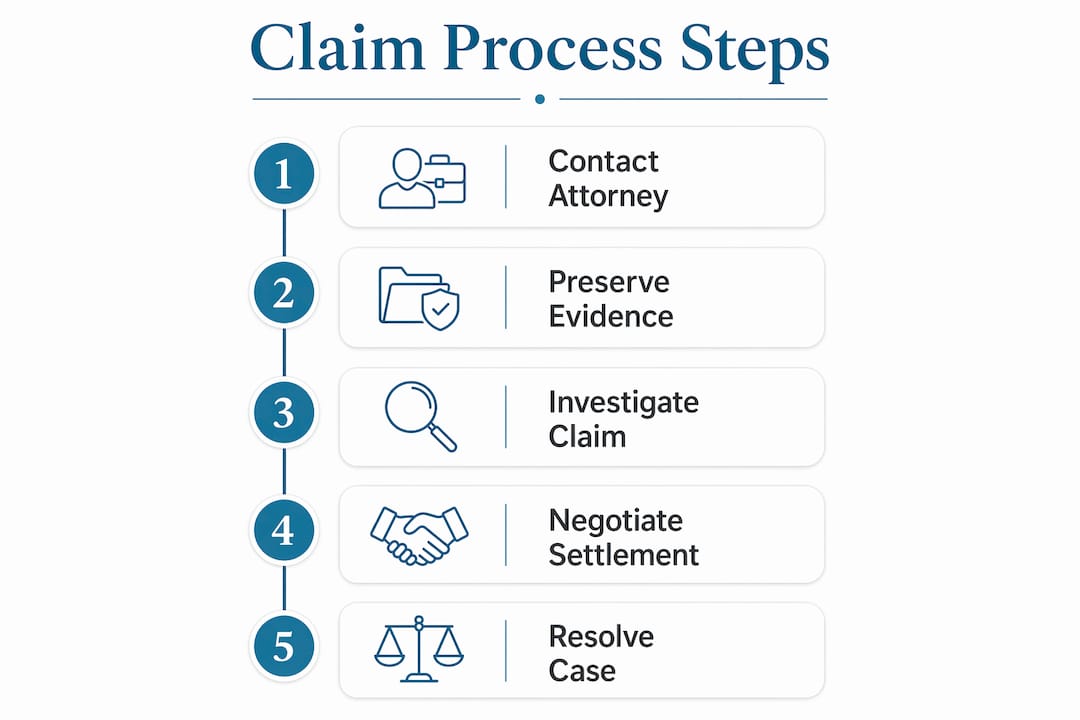
Attorneys act immediately. The first step is sending a legal preservation letter directly to the rideshare company, demanding that all digital records tied to your trip be held and not altered or destroyed. Without that letter, the platform has no legal obligation to retain the data beyond its standard deletion schedule.
That digital footprint does more than confirm the crash happened. It establishes which insurance phase was active at the moment of impact. If the driver's app shows they were carrying a passenger, the $1,000,000 commercial policy applies. If the insurer can argue the app was off, your claim drops to the driver's personal policy, which may be far lower or even lapse under a rideshare exclusion clause.
Victims cannot send preservation letters on their own. They lack the legal standing and the procedural knowledge to compel a technology company to hold records. Attorney intervention is crucial to protect this time-sensitive data before it is gone.
Pro Tip: Contact a rideshare attorney within 48 hours of your accident if possible. Witness memories fade, surveillance footage gets overwritten, and app data gets purged on routine schedules.
What attorneys do when dealing with insurers and negotiating settlements
Insurance adjusters are trained professionals whose performance is measured by how little they pay out. Adjusters use recorded statements to find inconsistencies, downplay injury severity, or shift blame onto the victim. A single phone call without legal guidance can reduce your claim's value significantly.
Attorneys handle all insurer communications from day one. You stop taking calls from adjusters. Your attorney reviews every document before you sign anything. That protection alone changes the trajectory of most claims.
The negotiation process follows a structured path when an attorney leads it:
- Full damage assessment: Attorneys work with medical professionals to document current injuries and project future treatment costs, lost earning capacity, and long-term care needs.
- Expert witness coordination: Accident reconstruction specialists, medical experts, and economic analysts build the evidentiary foundation for maximum compensation.
- Multi-policy identification: Attorneys identify every applicable insurance policy across the driver, the rideshare company, and any third parties.
- Demand letter submission: A formal demand letter is sent to all insurers with documented evidence of liability and damages.
- Negotiation or litigation: If insurers refuse a fair offer, attorneys take the case to trial. That credible threat alone pushes most cases toward better settlements.
78% of accident victims with attorneys secure higher settlements than unrepresented claimants. That figure reflects the compounding advantage of professional evidence gathering, expert testimony, and skilled negotiation working together. Uber and Lyft use defense counsel specifically trained to exploit gaps in driver classification and minimize company exposure. A skilled rideshare attorney counters that with independent investigation and thorough case preparation.
Common mistakes victims make without an attorney
Going without legal representation in a rideshare claim is not just risky. It is statistically costly. The most damaging mistakes follow a predictable pattern.
- Giving a recorded statement too soon: Insurers call quickly after an accident, often before you fully understand your injuries. Anything you say can be used to reduce your payout.
- Accepting the first settlement offer: Initial offers from rideshare insurers are almost always below actual claim value. Without an attorney to calculate full damages, many victims accept far less than they are owed.
- Misidentifying the applicable insurance phase: Victims who do not understand the three-phase coverage structure often pursue the wrong policy or accept a denial that an attorney could overturn.
- Delaying legal help: Waiting to contact legal counsel risks losing witness statements, surveillance footage, and the digital trip data that establishes liability.
- Ignoring future damages: Medical bills visible today represent only part of your loss. Future surgeries, physical therapy, and lost career earnings require expert projection that victims rarely calculate on their own.
Each of these mistakes compounds the others. A victim who gives a recorded statement and then accepts a low offer without understanding future damages has effectively done the insurer's job for them.
Pro Tip: If an insurer calls you directly after a rideshare accident, say only this: "I am represented by an attorney and all communications should go through them." Even if you have not hired one yet, that statement buys you time.
How to choose and work with a rideshare accident attorney
Selecting the right attorney is a practical process, not an overwhelming one. Most people delay because they assume legal help is expensive. The reality is the opposite.
- Start with a free consultation: Most rideshare attorneys offer free consultations and work on contingency. You pay nothing upfront. The attorney collects a percentage only if they win or settle your case.
- Verify rideshare-specific experience: General personal injury experience is not enough. Ask directly whether the attorney has handled Uber or Lyft claims and whether they understand layered insurance structures. For example, rideshare truck accidents in Washington, DC involve additional complexity that requires specialized knowledge.
- Understand the full scope of representation: A qualified rideshare attorney handles investigation, evidence preservation, insurer communications, expert coordination, negotiation, and trial if needed. Clarify that scope in your first meeting.
- Act early: The sooner you contact an attorney, the stronger your case. Early involvement means preserved evidence, protected statements, and a complete damage picture built from the start.
- Prepare for your first meeting: Bring the police report, photos from the scene, medical records, your rideshare app receipt, and any insurer correspondence you have already received.
The contingency fee structure removes the financial barrier entirely. You are not gambling money you do not have. You are partnering with a professional who only gets paid when you do.
Key takeaways
Rideshare accident claims require attorneys because the combination of layered insurance policies, corporate defense tactics, and perishable digital evidence creates a legal environment that unrepresented victims consistently lose.
| Point | Details |
|---|---|
| Insurance phases determine coverage | Coverage shifts between three phases based on the driver's app status at the time of the crash. |
| Digital evidence disappears fast | Attorneys send preservation letters immediately to secure GPS logs and trip data before deletion. |
| Attorneys multiply settlement outcomes | Represented victims recover up to 3.5 times more compensation than those without legal help. |
| Recorded statements harm claims | Speaking directly to insurers without counsel gives adjusters material to reduce your payout. |
| Contingency fees remove cost barriers | Most rideshare attorneys charge nothing upfront and collect only when your case is won or settled. |
What I have seen after years of watching these cases play out
I have watched too many accident victims walk away from rideshare claims with settlements that did not cover their medical bills, let alone their lost income or pain. The pattern is almost always the same. They called the insurer early, gave a statement, and accepted the first offer because they did not know what they were actually owed.
What strikes me most is how deliberate the other side is. Uber and Lyft are not small operations hoping for the best. They have legal teams built specifically to minimize what they pay injured people. That is not cynicism. That is their documented business practice. Victims who face that machine without an attorney are at a structural disadvantage from the first phone call.
The good news is that the contingency fee model genuinely levels the field. You do not need money to get a qualified attorney. You need to act fast and stop talking to the insurer directly. Every day you wait without legal representation is a day the other side uses to build their case against yours.
My strongest advice is simple: treat the first 48 hours after a rideshare accident as a legal emergency, not just a medical one. Get a free consultation before you sign anything or say anything on record. The attorneys who handle these cases know exactly what evidence to chase and exactly what the insurer will try to do. Let them do their job.
— Scott
How Accidentsurvivalguide helps rideshare accident victims take the right steps
Accidentsurvivalguide was built by accident survivors who understand what it feels like to face insurance companies without knowing your rights. If you were injured in a rideshare crash, the platform gives you free, practical tools to understand your claim before you make any decisions.
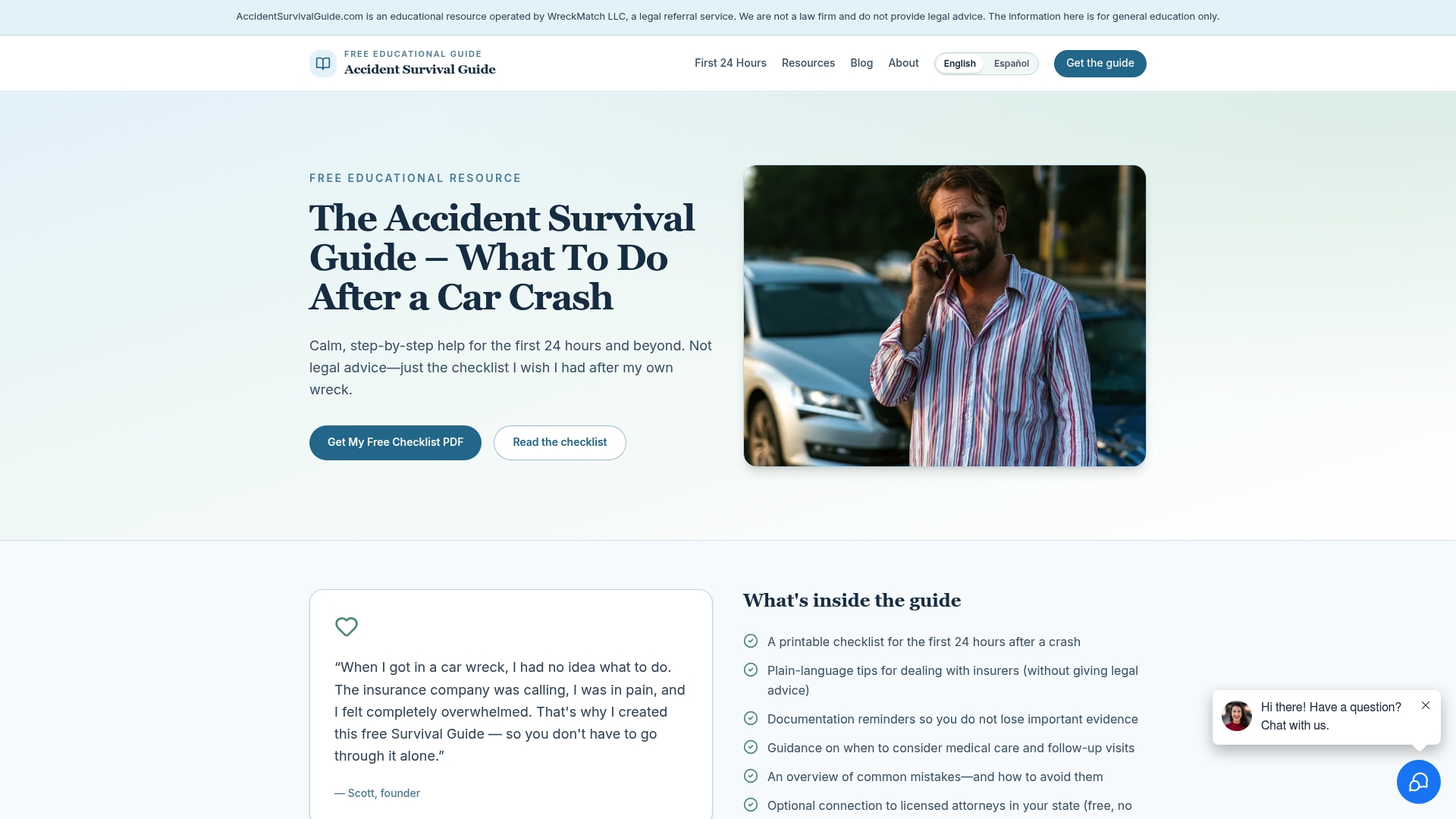
Start with the free compensation calculator to get a realistic estimate of what your rideshare injury claim may be worth. If you are in a specific state, Accidentsurvivalguide also offers step-by-step guides for accident victims in Texas, Illinois, and Virginia that walk you through exactly what to do after a crash. The site also connects you with experienced legal professionals nationwide who handle rideshare claims on contingency. You pay nothing unless you win.
FAQ
Why do rideshare accident claims need attorneys specifically?
Rideshare claims involve layered insurance policies, corporate defense teams, and fast-disappearing digital evidence that standard car accident claims do not. Attorneys manage all three, and represented victims recover up to 3.5 times more compensation on average.
What happens if I talk to the insurer without a lawyer?
Insurance adjusters use recorded statements to minimize payouts by finding inconsistencies or shifting blame. Speaking directly to an insurer without legal guidance is one of the most common ways rideshare victims reduce their own claim value.
How much does a rideshare accident attorney cost?
Most rideshare attorneys work on contingency, meaning you pay no upfront fees. They collect a percentage of the settlement only if your case is won or resolved in your favor.
How quickly should I contact a rideshare attorney after an accident?
Contact an attorney within 48 hours if possible. Digital trip data, witness statements, and surveillance footage can be lost or deleted quickly, and early attorney involvement is the most effective way to preserve that evidence.
Can I handle a rideshare claim myself if the accident was minor?
Even minor rideshare accidents can involve disputed insurance phases and corporate denial tactics. A free consultation costs nothing and gives you a clear picture of whether legal representation will materially improve your outcome.
Recommended
- Understanding Rideshare Truck Accidents in Washington, DC | Accident Survival Guide
- Rideshare Truck Accidents in Arlington, Texas: Understanding the Risks | Accident Survival Guide
- Rideshare Truck Accidents in Atlanta, Georgia: What You Need to Know | Accident Survival Guide
- Understanding Rideshare Truck Accidents in San Jose, California | Accident Survival Guide