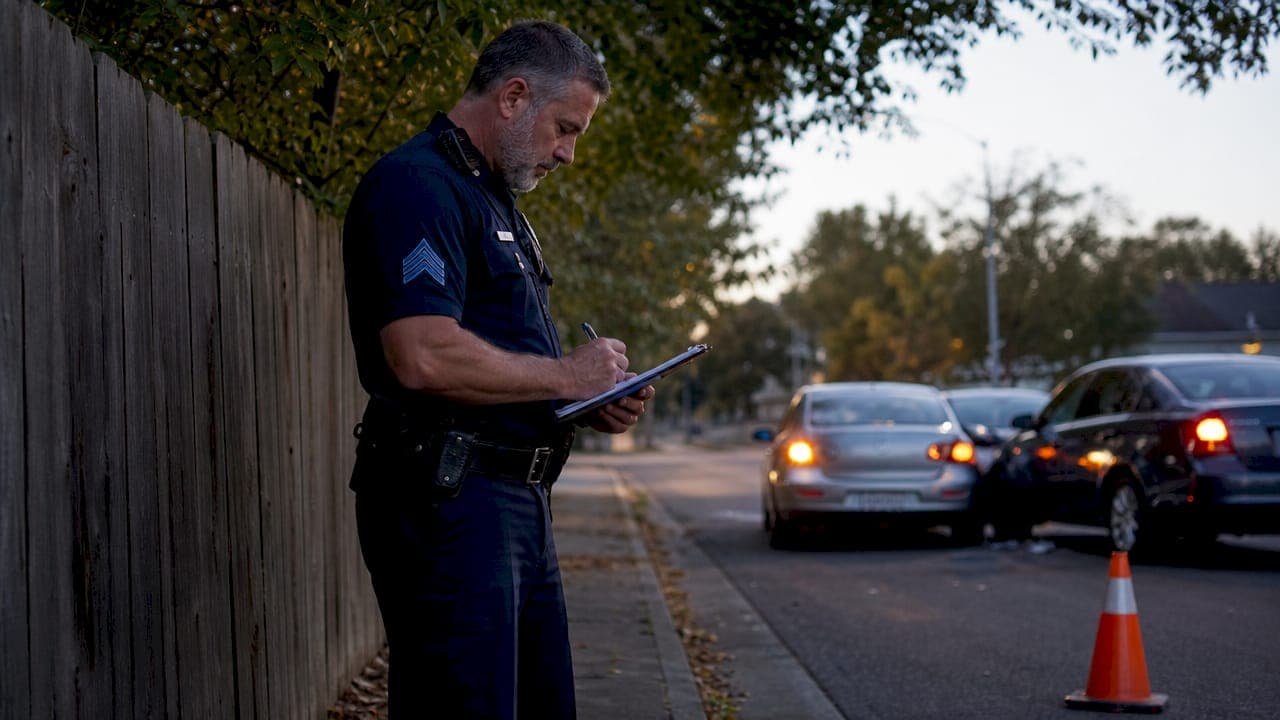
A police report in a car accident is the official law enforcement document that records the facts of a crash to support insurance claims and legal proceedings. The role of police report accident documentation plays in your case starts the moment an officer arrives on the scene. It becomes the foundation that insurers, attorneys, and courts use to build their understanding of what happened. Knowing what goes into that report, how it shapes your claim, and what to do when it contains errors gives you a real advantage in protecting your rights.
What does a police accident report typically include?
A police accident report is the single most influential initial evidence for liability and settlement value in any accident claim. Adjusters build their early liability theories around it from day one. Understanding its contents helps you spot gaps or errors before they cost you.
A standard report documents the following:
- Date, time, and exact location of the crash, including road name, direction of travel, and intersection details
- Road and weather conditions at the time, such as wet pavement, poor visibility, or construction zones
- Officer narrative, which is the responding officer's written account of the scene based on personal observation
- Scene diagram, showing vehicle positions, points of impact, and travel directions
- Vehicle damage descriptions, noting which areas of each vehicle were affected
- Traffic violations and citations issued, such as running a red light or failure to yield
- Witness names and contact information, which attorneys and adjusters use to pursue follow-up interviews
The officer's narrative carries particular weight. It reflects what the officer personally observed, which is why courts treat it differently from statements the officer recorded from drivers or bystanders.
Pro Tip: Request a copy of your police report within 3–5 business days of the accident. Errors are far easier to correct early than weeks later when the claim is already in motion.

How does a police report influence insurance claims and fault determination?
The importance of an accident police report to insurers is significant, but its legal authority is more limited than most people assume. Police reports do not legally determine fault. Insurers and courts assign fault independently based on all available evidence.
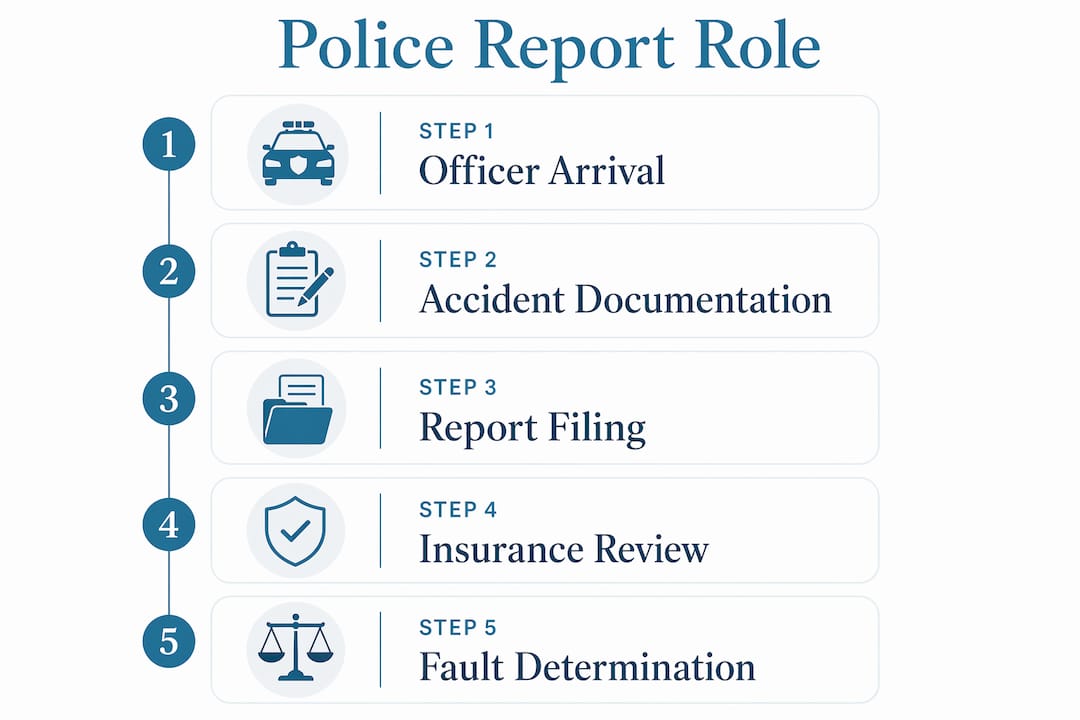
That said, the report shapes the early direction of every claim. A citation for running a red light, for example, creates a strong presumption of fault that influences early settlement talks. That presumption is not final, but it sets the tone.
Here is how insurers actually use the report:
- Starting point for liability theories: Adjusters read the officer narrative first and form an initial picture of fault.
- Citation review: A traffic violation listed in the report signals probable negligence and shifts the burden of rebuttal to the cited driver.
- Independent verification: Adjusters consult dashcam footage, witness interviews, and medical records to confirm or revise what the report says.
- Comparative negligence analysis: In states with comparative fault rules, both drivers may share responsibility. The report informs that split but does not decide it.
- Injury and damage substantiation: The report corroborates that a crash occurred and that damage was real, which matters when an insurer questions the severity of a claim.
"Adjusters treat police reports as a neutral first roadmap and verify details independently." — Nares Law Group
One critical point: police reports are generally inadmissible as direct evidence of fault in court when they rely heavily on third-party statements. Those portions are treated as hearsay. Only the sections based on the officer's firsthand observations typically survive evidentiary challenges.
Can you challenge or amend a police report if it contains errors?
Errors in police reports are more common than most people realize. Wrong vehicle descriptions, incorrect driver information, and inaccurate scene diagrams all appear regularly. Each one can distort your claim if left uncorrected.
Follow these steps to address inaccuracies:
- Get the report first. In Georgia, for example, reports are obtainable within 3 business days of the accident. Most states have similar timelines through the responding agency or a state DMV portal.
- Identify the specific error. Note whether it is a factual mistake (wrong license plate, wrong street name) or a matter of interpretation (officer's opinion on fault).
- Contact the reporting officer's department. Request a supplemental report or a formal amendment. The original report stays in the file, but the correction is attached to it.
- Submit supporting documentation. Photos, dashcam footage, and written statements from witnesses strengthen your correction request.
- Consult an attorney if the error is significant. If the mistake directly affects fault assignment or injury documentation, legal guidance is worth pursuing before the insurer closes the file.
Pro Tip: Keep a written record of every contact with the police department about your report. Note the date, the name of the officer or clerk you spoke with, and what was discussed. This paper trail protects you if the correction is disputed later.
Unresolved errors do real damage. An incorrect diagram showing you in the wrong lane, for instance, can shift fault percentages in a comparative negligence state and reduce your settlement by a meaningful amount.
What if no police report is filed?
No police report does not mean no claim. You can still file an insurance claim without one, but its absence increases insurer skepticism and forces the claim to rest entirely on other evidence. That raises the stakes for everything else you document.
When no report exists, build your own evidence file immediately. The steps you take in the first 24 hours after a car accident determine how strong your claim will be.
| Evidence type | Why it matters |
|---|---|
| Photos and video | Capture vehicle positions, damage, road conditions, and skid marks before the scene changes |
| Witness statements | Written or recorded accounts from bystanders carry weight when no officer was present |
| Medical records | Tie your injuries directly to the accident date and establish treatment history |
| Repair estimates and receipts | Document vehicle damage independently of any insurer assessment |
| Self-report or DMV report | Many states require drivers to file their own accident report when police do not respond |
Some states require a driver-filed report when property damage exceeds a set dollar threshold or when injuries occur. California, Florida, and Texas each have their own filing requirements and deadlines. Missing that deadline can create legal complications separate from the insurance claim itself.
- Photograph every angle of both vehicles before anyone moves them
- Get the other driver's name, license, insurance card, and plate number
- Ask any witnesses for their names and phone numbers on the spot
- File a self-report with your state DMV if required
Independent evidence such as photos and witness statements is the primary tool for corroborating or disproving assertions when no official report exists. Courts and adjusters both rely on it.
Key Takeaways
A police report is the starting point for every accident claim, but your own documentation, corrections, and independent evidence determine the final outcome.
| Point | Details |
|---|---|
| Report as initial roadmap | Insurers build early liability theories from the report but verify all details independently. |
| Citations shape but don't decide fault | A traffic citation creates a fault presumption that counter-evidence can challenge and overcome. |
| Errors must be corrected quickly | Request amendments within days of the accident before the insurer builds its case around wrong facts. |
| No report raises the evidence bar | Without a police report, photos, witness statements, and medical records carry the full weight of your claim. |
| Reports guide legal discovery | Attorneys use the report to identify witnesses and evidence to pursue, not as final proof of fault. |
What I've learned about treating police reports as a starting point, not the final word
Scott here. After going through a serious accident myself and spending years helping others navigate the aftermath, one pattern stands out clearly. People hand too much authority to the police report.
The report is written by an officer who arrived after the crash, often without witnesses, sometimes in bad weather, always under time pressure. That officer's snap judgment serves incident reporting, not civil liability adjudication. Their fault opinion is persuasive to an adjuster on day one. It is not binding on day sixty when your attorney presents dashcam footage that tells a different story.
The mistake I see most often is people reading an unfavorable report and giving up. They assume the officer got it right and that the insurer will follow the report to a low settlement. That is not how the process works. Adjusters consult all available evidence over time. Counter-evidence changes outcomes.
Treat the report as your first piece of information, not your last. Verify every detail against your own photos and notes. Correct errors fast. And if the report contains a citation or a narrative that misrepresents what happened, document your version thoroughly and get legal help before you accept any settlement offer.
— Scott
Accidentsurvivalguide resources for navigating police reports and claims
Accidentsurvivalguide was built specifically for moments like this one, when you are staring at a police report and trying to figure out what it means for your insurance claim or potential lawsuit.
The free accident compensation calculator at Accidentsurvivalguide gives you an immediate estimate of what your claim may be worth based on your specific circumstances. State-specific guides for Texas, Illinois, and Louisiana walk you through local police report requirements, filing deadlines, and documentation steps that apply to your jurisdiction. Every resource on the site is free, written in plain language, and designed to help you make informed decisions before you speak with an insurance adjuster or sign anything.
FAQ
What is the main role of a police report in a car accident?
A police report serves as the official third-party record of a crash, documenting officer observations, citations, and witness information that insurers and attorneys use to establish initial facts and guide claims or lawsuits.
Does a police report determine who is at fault?
No. Police reports do not legally determine fault. Insurers and courts assign fault independently based on all available evidence, including photos, witness interviews, and medical records.
How do I get a copy of my police accident report?
Contact the law enforcement agency that responded to your accident. Most agencies allow you to request a copy online, by mail, or in person, typically within 3–5 business days of the crash.
Can a police report be used as evidence in court?
Portions of a police report based on the officer's firsthand observations are generally admissible. Sections that rely on third-party statements are often excluded as hearsay unless a specific exception applies.
What should I do if my police report contains errors?
Contact the reporting officer's department and request a supplemental or amended report. Submit supporting documentation such as photos or witness statements, and consult an attorney if the error directly affects fault or injury documentation in your claim.