
Legal consultation is defined as formal attorney-client advice that applies the law directly to your specific facts, and accident victims who skip it routinely lose compensation they were legally entitled to collect. The difference between reading general legal information online and sitting down with a personal injury attorney is the difference between knowing a rule exists and knowing whether that rule works in your favor. Personal injury lawsuits specifically require an attorney's help to connect legal standards to your unique circumstances. Why accident victims need legal consultation comes down to three realities: evidence disappears fast, insurance companies move faster, and legal deadlines wait for no one.
Why accident victims need legal consultation from day one
The core reason to consult an attorney immediately after an accident is that the legal clock starts the moment the crash happens, not the moment you decide to file a claim. Insurance adjusters begin building their defense file on day one. Insurers scrutinize claimant conduct from the accident day forward, looking for anything that weakens your position. That means every statement you make, every post you publish, and every gap in your medical treatment becomes material they can use against you.

An attorney does not just advise you on what the law says in general. Only an attorney can tailor the application of law to your specific facts, which is what separates legal advice from legal information. A blog post can tell you that negligence requires four elements. An attorney can tell you whether the driver who hit you meets that standard given the police report, road conditions, and witness accounts from your specific crash. That specificity is what protects your rights and your compensation potential from the very start.
How early legal help preserves critical evidence for your claim
Evidence in accident cases is fragile and time-sensitive in ways most victims do not anticipate. Surveillance footage from nearby businesses or traffic cameras is often overwritten within 24 to 72 hours. The vehicle that hit you may be repaired or sold before anyone documents the damage. Witnesses are easiest to locate and most willing to cooperate in the days immediately following a crash. Evidence can be lost quickly without attorney intervention, and once it is gone, it cannot be recreated.
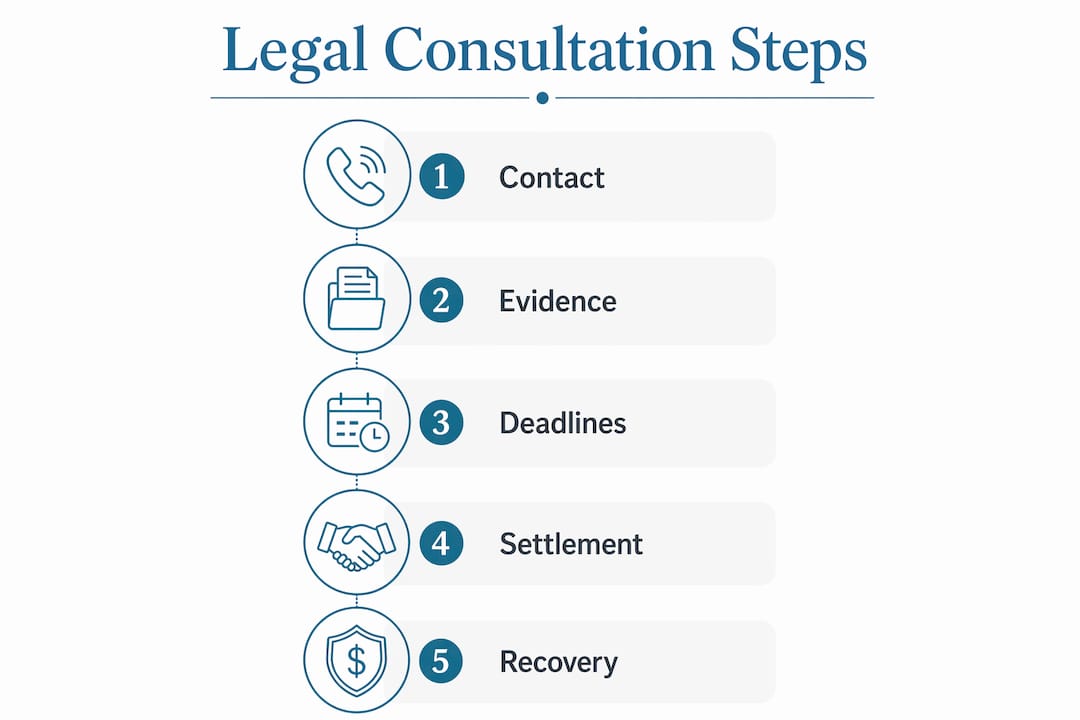
Attorneys address this by sending preservation letters the moment they take a case. These letters formally demand that specific parties retain evidence rather than allow it to be deleted or destroyed. Preservation letters target specific evidence categories and compliance is legally enforceable, meaning a party that destroys evidence after receiving one can face court sanctions. That legal pressure is something no individual victim can generate on their own.
The scope of preservation extends further than most people realize. Preservation letters may extend to third parties like property owners, data custodians, or employers who hold records relevant to your claim. A comprehensive documentation timeline also includes initial emergency room visits, diagnostic imaging, therapy notes, and prescriptions, all of which counter any insurer argument that your injuries were pre-existing or unrelated to the crash.
Pro Tip: Take photos and video at the scene immediately, even if you feel fine. Your attorney can build on that foundation, but they cannot manufacture evidence that was never captured.
Key evidence categories your attorney will work to preserve include:
- Surveillance and dashcam footage from the scene and nearby businesses
- Black box or event data recorder data from the vehicles involved
- Cell phone records if distracted driving is suspected
- Medical records from every treatment provider, starting with the ER
- Witness contact information and written or recorded statements
Common mistakes accident victims make without early legal counsel
The most damaging mistakes in personal injury cases happen in the days and weeks after the accident, before most people even realize they have a claim worth protecting. These are not courtroom errors. They are everyday decisions made under stress by people who did not know the rules. Reviewing the most costly mistakes after a crash shows a consistent pattern: unrepresented victims give away leverage they did not know they had.
The five most common errors that attorneys prevent are:
- Giving a recorded statement to the opposing insurer. Adjusters are trained to ask questions that produce answers damaging to your claim. You are not legally required to give a recorded statement to the other driver's insurer, and doing so without counsel is a serious risk.
- Posting on social media. A photo of you at a family gathering three weeks after a crash, even if you are in pain, can be used to argue your injuries are not as severe as claimed.
- Delaying or skipping medical treatment. Gaps in treatment give insurers grounds to argue your injuries were not serious or were caused by something other than the accident.
- Accepting the first settlement offer. Early offers are almost always made before the full extent of injuries is known, which means they are almost always too low.
- Missing procedural deadlines. Insurance policies have their own internal reporting deadlines that are separate from the legal statute of limitations, and missing either can end your claim.
Pro Tip: Before speaking to any insurance company other than your own, call an attorney. Most personal injury attorneys offer free initial consultations, so the cost of that call is zero.
Reviewing common mistakes after a car crash confirms that these errors are not rare. They are the default behavior of people who are overwhelmed, in pain, and trusting that the system will treat them fairly without an advocate in their corner.
What are the legal deadlines that can end your claim?
Statutes of limitations are hard legal deadlines that set the maximum time you have to file a personal injury lawsuit after an accident. Miss the deadline and your claim is dismissed, regardless of how strong your evidence is or how serious your injuries are. Illinois requires most personal injury claims to be filed within two years of the injury date, which is a typical standard across many states, though the specific window varies by jurisdiction and claim type.
The table below shows how different factors affect your filing window:
| Factor | Effect on deadline |
|---|---|
| Standard personal injury claim | Typically 2 years from the date of injury |
| Discovery rule | Clock may start when injury is discovered, not when it occurred |
| Minor victim | Deadline may be tolled until the victim turns 18 |
| Government defendant | Notice of claim often required within 6 months |
| Wrongful death claim | Separate deadline, often 2 years from date of death |
Missing deadlines usually ends the claim regardless of its merits, which is why attorneys track these dates from the first consultation. Discovery rules add another layer of complexity. In some cases, the clock does not start until you knew or reasonably should have known about the injury, which matters for conditions like traumatic brain injuries that are not immediately apparent. An attorney monitors all of these variables so nothing slips through.
Why legal advice matters before you accept any settlement offer
Insurance adjusters are trained negotiators working for companies whose financial interest is to pay you as little as possible. Adjusters push quick settlements and early offers are frequently far below the actual cost of an injury once future medical expenses, lost earning capacity, and pain and suffering are factored in. Accepting an early offer almost always means signing a release that permanently waives your right to seek additional compensation, even if your condition worsens.
An attorney evaluates a settlement offer against the full picture of your damages, not just the bills you have received so far. That analysis includes:
- Current and projected future medical costs, including surgery, physical therapy, and specialist care
- Lost wages already incurred and reduced earning capacity going forward
- Non-economic damages like pain, suffering, and loss of enjoyment of life
- Comparative fault analysis, meaning whether the insurer is trying to reduce your payout by assigning you partial blame
Insurers are less likely to undervalue claims when victims have legal representation from the start. The presence of an attorney signals that you understand your rights and are prepared to litigate if necessary. That signal alone changes how insurers calculate their offers.
The financial barrier to hiring an attorney is lower than most victims assume. Attorneys generally work on contingency, meaning they collect a percentage of your recovery only if you win. If there is no recovery, you owe no attorney fees. That structure makes legal help for accident victims accessible regardless of financial situation.
Practical steps for getting your accident claim consultation right
The single most important step is to contact a personal injury attorney as soon as possible after the accident, ideally within the first 48 to 72 hours. Evidence preservation, insurer communications, and medical documentation all benefit from early attorney involvement. Waiting weeks or months while you "see how things develop" is the pattern that leads to weakened claims and missed deadlines.
When you prepare for your initial consultation, bring the following:
- The police or accident report
- Photos and videos from the scene
- Contact information for all witnesses
- All medical records and bills received so far
- Correspondence from any insurance company
- Your own insurance policy documents
Ask the attorney direct questions during the consultation. Ask how many cases like yours they have handled, what their contingency fee percentage is, whether they have trial experience, and who will actually work on your file day to day. Choosing the right attorney means finding someone who specializes in personal injury, communicates clearly, and has a track record with cases similar to yours. A general practice attorney who handles wills, divorces, and the occasional fender-bender is not the same as a dedicated personal injury litigator.
Key takeaways
Accident victims who consult a personal injury attorney immediately after a crash protect their evidence, avoid costly mistakes, and negotiate from a position of strength rather than desperation.
| Point | Details |
|---|---|
| Consult an attorney immediately | Evidence disappears within days; early legal help preserves your strongest proof. |
| Avoid common unrepresented mistakes | Recorded statements, social media posts, and treatment gaps all damage claims. |
| Know your filing deadline | Most states allow roughly 2 years, but exceptions and shorter windows exist. |
| Never accept the first offer | Early settlement offers rarely account for future medical costs or lost earning capacity. |
| Contingency fees remove financial barriers | You pay no attorney fees unless you recover compensation. |
What I've seen change when victims act early
I co-founded Accidentsurvivalguide after going through a serious accident myself, and the single clearest pattern I have seen across thousands of victim stories is this: the people who called an attorney in the first week almost always ended up in a better position than those who waited. Not because the attorney performed miracles, but because they stopped the bleeding early.
The hesitation I hear most often is "I don't know if my case is serious enough to bother a lawyer." That framing is backwards. The consultation exists precisely to answer that question, and it costs you nothing to ask. What does cost you is waiting until the surveillance footage is gone, the witness has moved, and the insurer has three months of recorded statements on file.
The other misconception I want to address directly: legal support does not mean you are being aggressive or litigious. It means you are protecting yourself the same way the insurance company is protecting itself, with professional representation. The insurer has a team of adjusters and attorneys working your file from day one. You deserve the same level of attention on your side. Accidentsurvivalguide was built to help you understand that and act on it before the window closes.
— Scott
Start with the right tools and the right legal team
Accidentsurvivalguide gives you free resources to understand your rights before you speak to anyone, including insurance companies. If you are wondering what your claim might be worth, use the free compensation calculator to get an initial estimate based on your specific situation. It takes only a few minutes and gives you a realistic baseline before any negotiation begins.
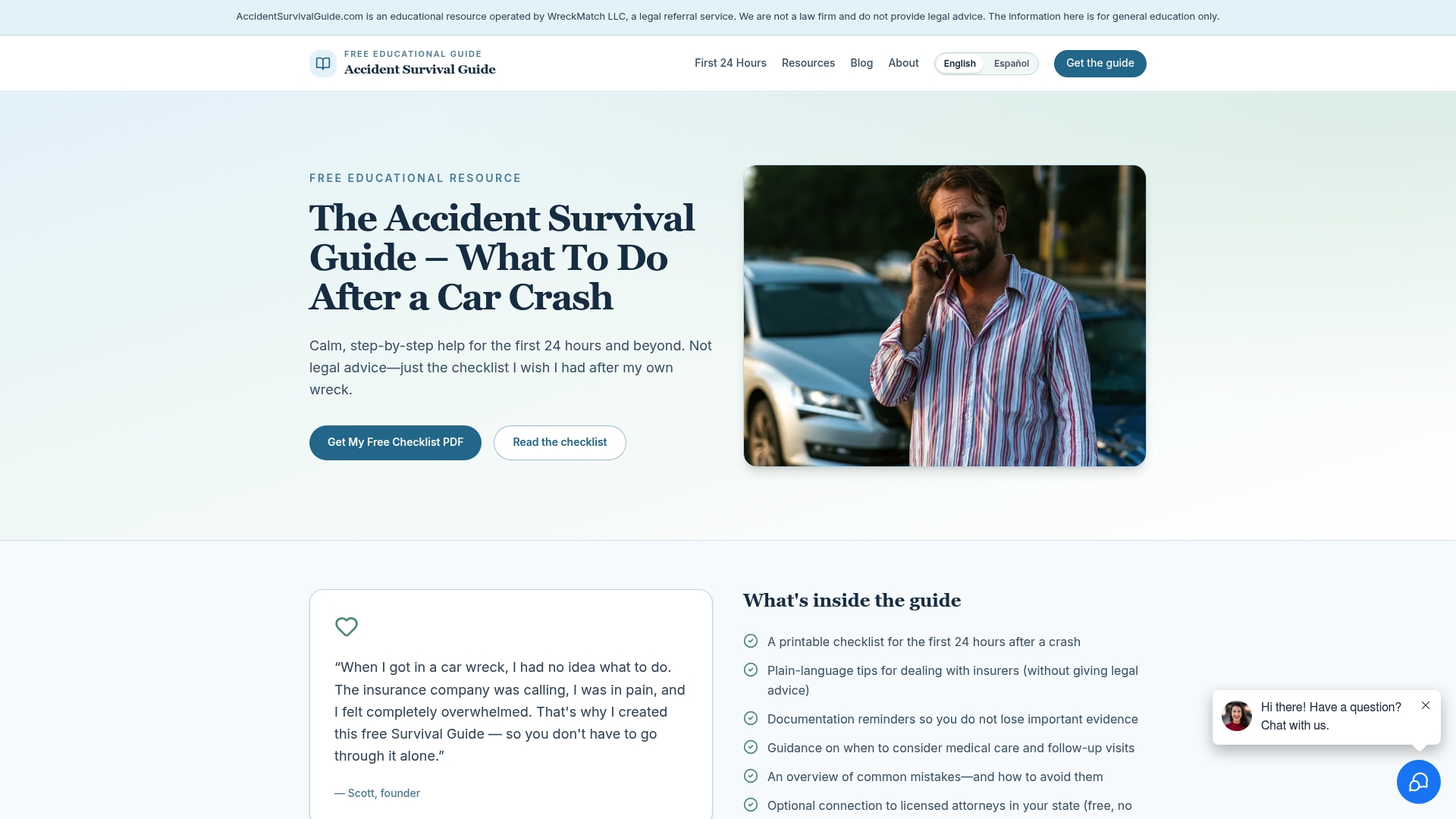
From there, Accidentsurvivalguide can connect you with experienced personal injury attorneys nationwide who offer free initial consultations and work on contingency. You pay nothing unless you recover. The resources on the site cover everything from medical documentation to insurance tactics, so you walk into that first attorney meeting prepared, informed, and protected.
FAQ
What is legal consultation for accident victims?
Legal consultation is a formal meeting with a licensed attorney who applies the law directly to your specific accident facts. It differs from general legal information because it produces advice tailored to your case, which is what personal injury claims require.
When should I hire a lawyer after an accident?
Contact a personal injury attorney within 48 to 72 hours of the accident if possible. Early involvement allows attorneys to preserve evidence, send preservation letters, and prevent costly mistakes before insurers gain an advantage.
What if I can't afford a personal injury attorney?
Most personal injury attorneys work on a contingency fee basis, meaning you owe no fees unless they recover compensation for you. This structure makes legal help accessible regardless of your current financial situation.
Can I lose my claim by waiting too long?
Yes. Statutes of limitations impose hard deadlines, and missing them ends your claim permanently regardless of its merits. Illinois, for example, requires most personal injury claims to be filed within two years of the injury date.
Do I have to accept the settlement offer the insurance company sends?
No. You have the right to negotiate or reject any settlement offer. An attorney can evaluate whether an offer reflects the full value of your damages, including future medical costs and lost earning capacity, before you sign anything.