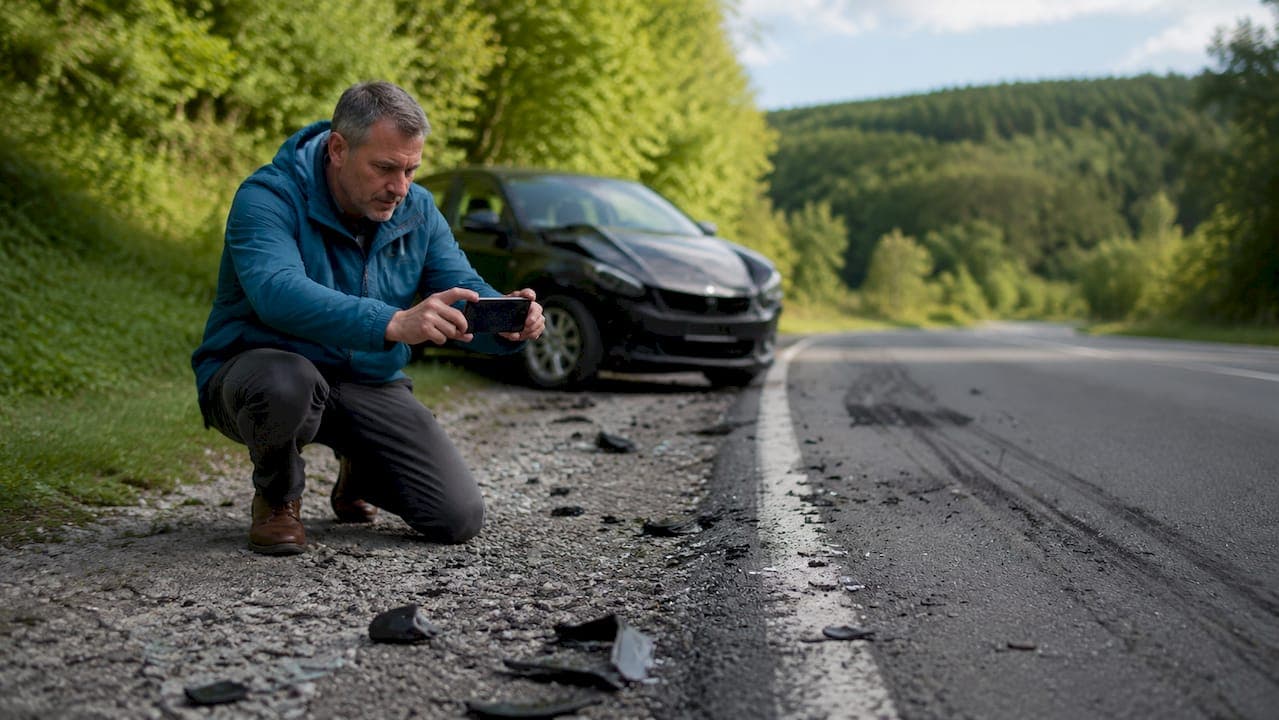
Car accident evidence preservation is the process of securing photos, witness contacts, vehicle data, and legal documentation immediately after a crash to protect your claim. Most people assume they have years to act because the statute of limitations for filing a lawsuit can stretch three years or more. That assumption is wrong. Surveillance footage overwrites every 24–72 hours, and Event Data Recorder (EDR) data disappears the moment a vehicle is repaired or totaled. This guide covers exactly what to preserve, how fast it vanishes, and the legal tools that lock it in place.
What kinds of evidence must you preserve after a car accident?
The strongest accident claims rest on multiple, overlapping evidence types. No single piece wins a case alone. Here is what you need to collect.
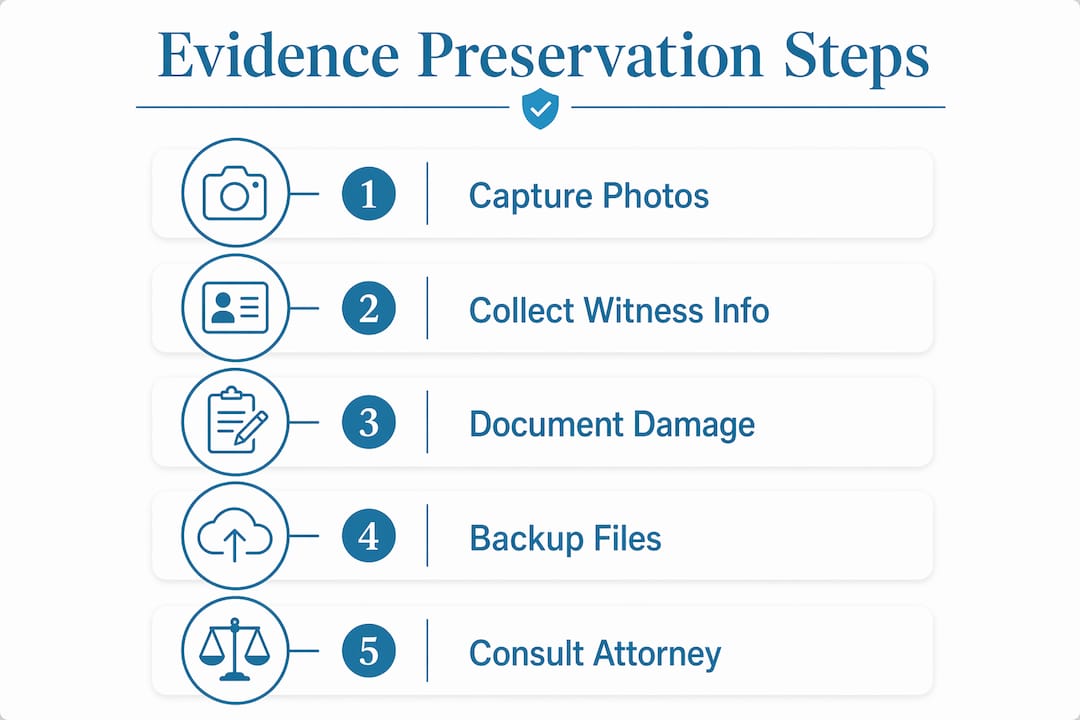
Accident scene photos and videos are your first priority. Shoot 360-degree views of all vehicles, road conditions, skid marks, traffic signs, and weather. Capture your injuries before any treatment is applied. The timestamp and GPS metadata embedded in smartphone photos serve as automatic documentation of when and where each image was taken.
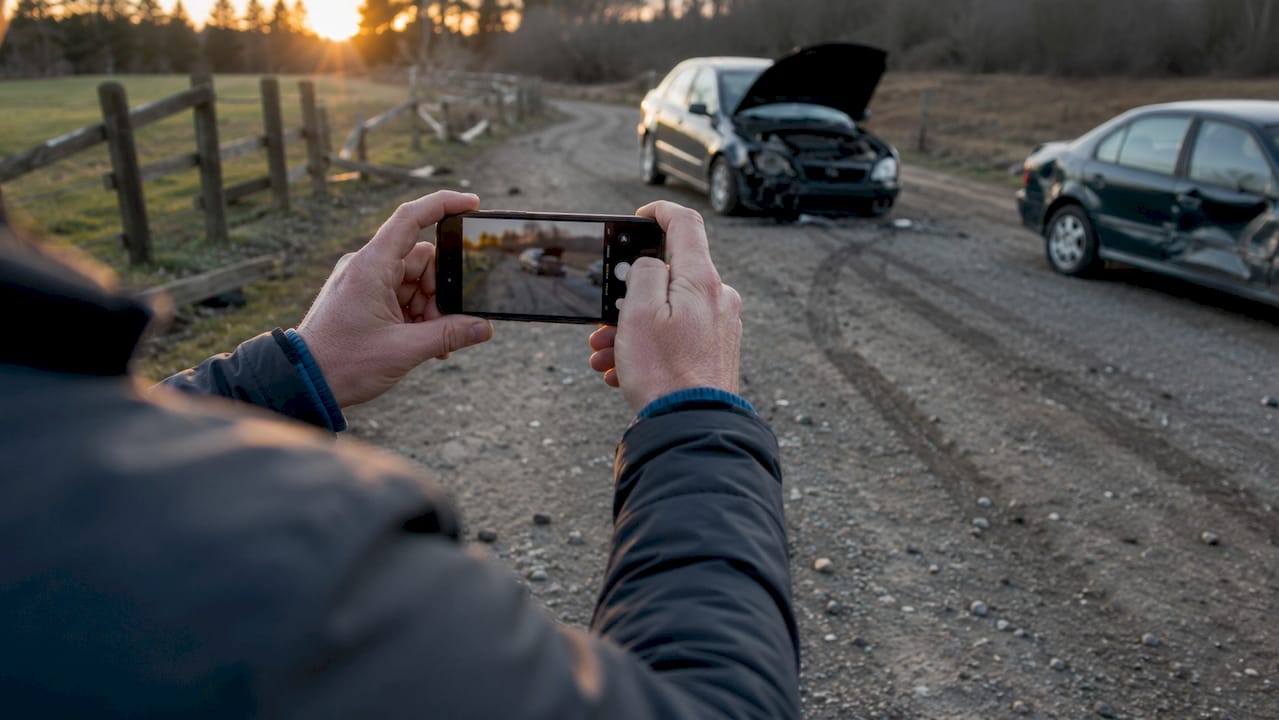
Witness information and statements come next. Get full names, phone numbers, and email addresses from anyone who saw the crash. Ask them to record a brief voice memo on your phone while details are fresh. Witness memory fades significantly within weeks, so a recorded statement made at the scene carries far more weight than one taken months later.
Police reports and medical records form the official backbone of your claim. Request the police report number at the scene and follow up within 48 hours to obtain the full document. Seek medical evaluation within 24 hours of the crash. Delaying medical evaluation beyond that window gives insurance companies grounds to argue your injuries pre-existed the accident.
Electronic and digital data is the category most victims overlook. This includes:
- EDR (black box) data recording speed, braking, and steering inputs at the moment of impact
- Dashcam footage from your vehicle or nearby vehicles
- Cell phone records showing distracted driving by the other party
- Telematics data from fleet vehicles or rideshare apps like Uber or Lyft
Property and clothing damage rounds out your evidence. Photograph your damaged vehicle from every angle before any repairs. Keep the clothing you wore in a sealed bag. Torn or bloodstained clothing is physical evidence that corroborates injury claims.
Pro Tip: Back up all photos and videos to a cloud service like Google Photos or iCloud immediately. Local storage on a damaged or lost phone is not a reliable archive.
Check the car accident documentation checklist from Accidentsurvivalguide for a complete rundown of every document type to request.
How quickly does evidence disappear after a crash?
The three-year statute of limitations creates a dangerous illusion of time. Critical digital evidence like surveillance footage and black box data must be secured within days or hours, not years. The table below shows exactly how fast each evidence type degrades.
| Evidence type | Typical disappearance window |
|---|---|
| Surveillance footage (business/parking lot) | 24–72 hours |
| EDR (black box) data | 24–48 hours if vehicle is repaired or totaled |
| 911 dispatch recordings | 30–180 days depending on jurisdiction |
| Witness memory accuracy | Degrades significantly within weeks |
| Physical road evidence (skid marks, debris) | Hours to days depending on weather and traffic |
Each row in that table represents a hard deadline. Miss the 24-hour window on EDR data and that information is gone permanently once a repair shop touches the vehicle.
"While lawsuits can be filed years later, vital evidence like footage and EDR data can vanish within 24–72 hours. The statute of limitations does not protect evidence. Only immediate action does."
911 dispatch recordings are a frequently forgotten resource. These recordings capture the initial report of the crash, including caller descriptions of fault and road conditions. 911 records are purged within 30–180 days based on jurisdiction, so a written preservation request must go out within the first week.
What steps should you take at the accident scene?
Follow these steps in order. Each one builds on the last, and skipping any of them creates gaps that insurance adjusters will exploit.
- Check for injuries and call 911. Do not move injured parties unless there is immediate danger. A police report establishes an official record of the crash.
- Photograph everything before moving vehicles. Capture all four sides of every vehicle, license plates, road markings, traffic signals, and any visible injuries. Do not wait until vehicles are moved to the shoulder.
- Collect witness contact information. Ask bystanders for their name, phone number, and a brief recorded statement. Do this before they leave the scene.
- Document conditions. Note the time, weather, lighting, and road surface in a voice memo or written note. These details support or contradict the other driver's account.
- Do not repair or move the vehicle. Keep the vehicle in its post-crash condition until an attorney or accident reconstructionist can inspect it. Repairs destroy EDR data and physical evidence.
- Write your personal account. As soon as you are safe, write down everything you remember: the sequence of events, what the other driver said, and any pain or symptoms you feel. Memory degrades within hours.
- Seek medical evaluation within 24 hours. Go to an emergency room, urgent care, or your physician the same day if possible. A documented medical visit creates a direct link between the crash and your injuries.
Pro Tip: Use your phone's voice memo app to narrate what you see at the scene. A spoken description captured in real time is admissible and often more detailed than written notes made later.
For a full breakdown of what to do in the immediate aftermath, Accidentsurvivalguide has a detailed walkthrough of immediate post-crash steps that applies in most states.
How do legal tools and professionals help preserve evidence?
Some evidence is simply out of reach without an attorney. Private surveillance systems, EDR data from another party's vehicle, and employer telematics records all require formal legal action to access.
A spoliation letter is the most powerful tool available. It is a formal written notice sent to any party that controls relevant evidence, demanding they preserve it immediately. Spoliation letters establish legal duty, and if evidence is destroyed after one is received, courts can issue adverse inference instructions. That means a jury is told it may assume the destroyed evidence was harmful to the party who destroyed it. That single legal consequence changes how defendants and insurers behave.
Attorneys send spoliation letters to:
- The at-fault driver and their insurer
- Businesses whose surveillance cameras captured the crash
- Employers of commercial vehicle drivers
- Rideshare companies like Uber or Lyft
- Government agencies controlling traffic camera footage
Unauthorized access to EDR data or private surveillance without consent or a court order can invalidate the evidence entirely and expose you to legal liability. This is not a step to attempt on your own. An attorney sends the preservation demand and, if necessary, files for a court order to compel production.
"A spoliation letter does not just preserve evidence. It creates legal accountability. Once that letter is sent, the other party cannot claim the evidence was lost by accident."
The earlier an attorney is involved, the more evidence survives. Most personal injury attorneys offer free consultations and can send a spoliation letter within hours of being retained.
What mistakes do accident victims most often make?
These are the errors that consistently weaken claims and reduce settlements.
- Waiting too long to collect evidence. Returning to the scene the next day to photograph skid marks or look for witnesses is often too late. Road crews clean debris, and witnesses disperse.
- Repairing the vehicle before EDR data is extracted. EDR data is permanently lost if the vehicle is repaired or sold for salvage before extraction. Never authorize repairs until an attorney confirms the data has been preserved.
- Failing to request surveillance footage quickly. A verbal request to a business is not enough. A written, dated preservation request sent the same day is the minimum standard.
- Relying only on oral witness statements. Memories change. A witness who was certain at the scene may become uncertain six months later. Recorded statements and written accounts made immediately are far more durable.
- Attempting to access private data without legal authorization. Pulling data from another driver's EDR or requesting private camera footage without proper legal process can destroy your case and create liability for you.
- Skipping or delaying medical treatment. A gap in treatment is one of the most common reasons insurance companies deny injury claims. The argument is simple: if you were truly injured, you would have sought care immediately.
Key takeaways
Preserving accident evidence within the first 24–72 hours is the single most important action you can take to protect your claim and prevent permanent evidence loss.
| Point | Details |
|---|---|
| Act within hours, not days | Surveillance footage and EDR data disappear within 24–72 hours of the crash. |
| Seek medical care immediately | Delaying treatment beyond 24 hours gives insurers grounds to deny your injury claim. |
| Use a spoliation letter | An attorney-sent spoliation letter creates legal duty to preserve and punishes destruction. |
| Avoid unauthorized data access | Accessing EDR or private footage without legal process invalidates evidence and risks liability. |
| Document everything at the scene | Photos, witness contacts, and written notes made on-site are far stronger than reconstructed accounts. |
What I have learned about evidence after real accidents
I co-founded Accidentsurvivalguide after going through a serious accident myself, and the one thing that surprised me most was how fast the clock starts running. Not the legal clock. The evidence clock.
Most people I talk to spend the first 24 hours dealing with shock, medical appointments, and insurance calls. That is completely understandable. But that same window is when surveillance footage gets overwritten, when the other driver's vehicle gets towed to a shop, and when witnesses go back to their lives. By the time you feel ready to think clearly, some of your best evidence is already gone.
The other thing I have seen repeatedly is how much digital evidence like EDR data changes the outcome of a case. Witness accounts get disputed. Photos get questioned. But a vehicle's black box showing the other driver was traveling 15 miles per hour over the speed limit at the moment of impact is nearly impossible to argue against. That data is objective, timestamped, and specific. Insurance adjusters know it too, which is why they move quickly to settle before it surfaces.
My honest advice: call an attorney the same day, even if you are not sure you need one. Most will send a spoliation letter immediately at no cost to you. That one action protects more evidence than anything else you can do on your own. You do not have to have everything figured out. You just have to act fast.
— Scott
Start protecting your claim today
If you were just in an accident, the steps in this guide matter most right now. Accidentsurvivalguide was built specifically for this moment, when you need clear answers fast and cannot afford to make a costly mistake.
Use the free accident compensation calculator on Accidentsurvivalguide to get an estimate of what your claim may be worth in 2026. The platform also provides checklists, legal guidance, and connections to experienced attorneys nationwide who can send preservation letters on your behalf today. You do not need to navigate this alone.
FAQ
What is the most important evidence to preserve after a crash?
Photos of the accident scene, EDR data, and surveillance footage are the three highest-priority items. All three can disappear within 24–72 hours if not actively preserved.
How long do I have to preserve accident evidence?
The legal filing deadline may be years away, but critical evidence like surveillance footage and black box data must be secured within 24–72 hours of the crash or it is permanently lost.
What is a spoliation letter and do I need one?
A spoliation letter is a formal legal notice demanding that another party preserve specific evidence. An attorney sends it to insurers, businesses, and other drivers, and courts can penalize parties who destroy evidence after receiving one.
Can I access the other driver's EDR data myself?
No. Accessing another vehicle's EDR data without consent or a court order can invalidate the evidence and expose you to legal liability. An attorney must handle this through a formal preservation demand or court order.
Does delaying medical treatment hurt my claim?
Yes. Waiting more than 24 hours to seek medical evaluation gives insurance companies grounds to argue your injuries pre-existed the accident, which is one of the most common reasons claims are denied or reduced.