The steps you take in the first hour after a car accident determine your health outcome, your legal standing, and the size of your insurance settlement. This is the core of what "qué hacer después de accidente explicado" means in practice: a clear, ordered post-accident action plan that protects you before you speak to a single insurance adjuster. Whether you are dealing with a fender bender or a serious collision, the same rules apply. Emergency responders, insurance companies, and medical providers all respond better when you follow the right sequence from the start.
What does "qué hacer después de accidente explicado" mean in practice?
The phrase translates directly to "what to do after an accident, explained." The formal term used by legal and insurance professionals is the post-accident protocol, and it covers everything from scene safety to claim filing. Knowing this protocol is not optional. Skipping even one step can cost you compensation you are legally entitled to receive.
The PAS protocol, which stands for Protect, Alert, and Help, is the standard post-accident framework used in Spain and widely referenced by accident response professionals. It organizes your first actions into three clear priorities: secure the scene, call for help, and assist the injured. This structure works because it prevents the two most common mistakes people make: panicking and doing nothing, or rushing around and making things worse.
Every step in this article follows that same logic. Act in order. Stay calm. Protect your rights.
How do you secure the scene right after the crash?
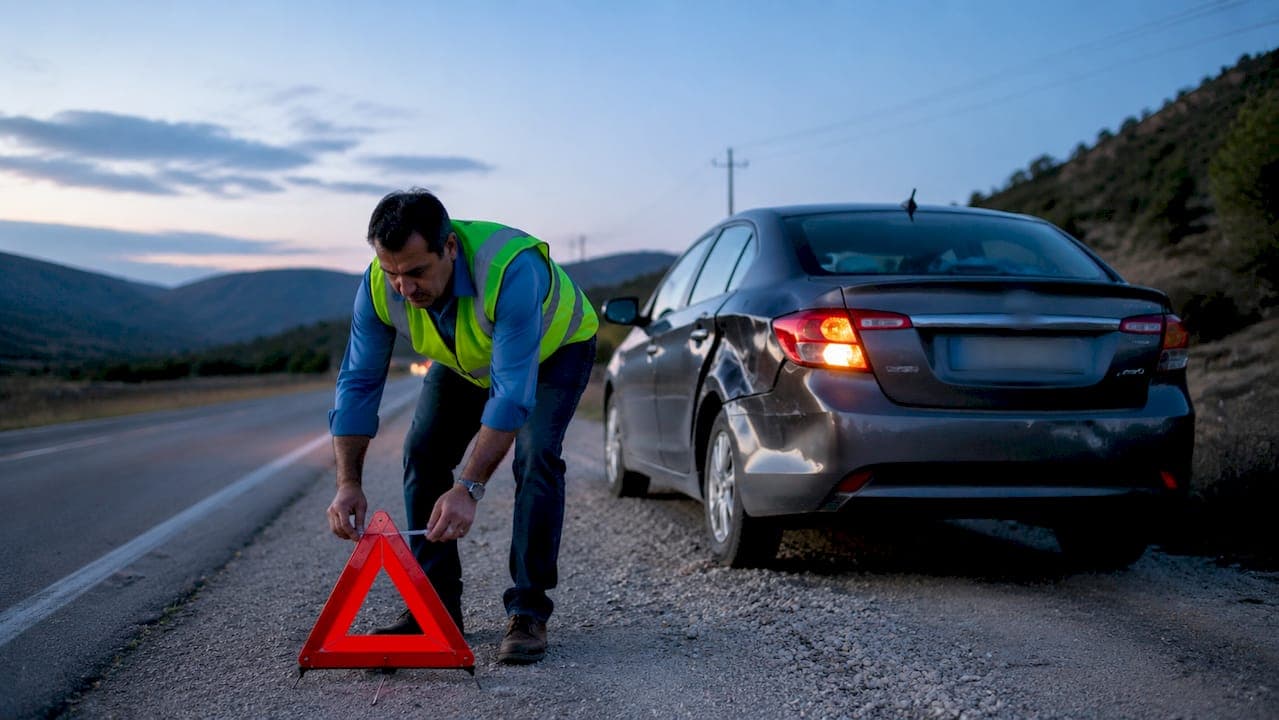
Your first job after a collision is to make the scene safe for everyone involved. Turn on your hazard lights immediately. If you can exit the vehicle safely, put on your reflective vest before stepping out.
Since 2026, the V16 beacon is mandatory on main roads in Spain, replacing the older triangle system. Place it at least 50 meters from the vehicle so oncoming traffic has time to react. This is both a legal requirement and a basic safety measure that prevents secondary collisions.
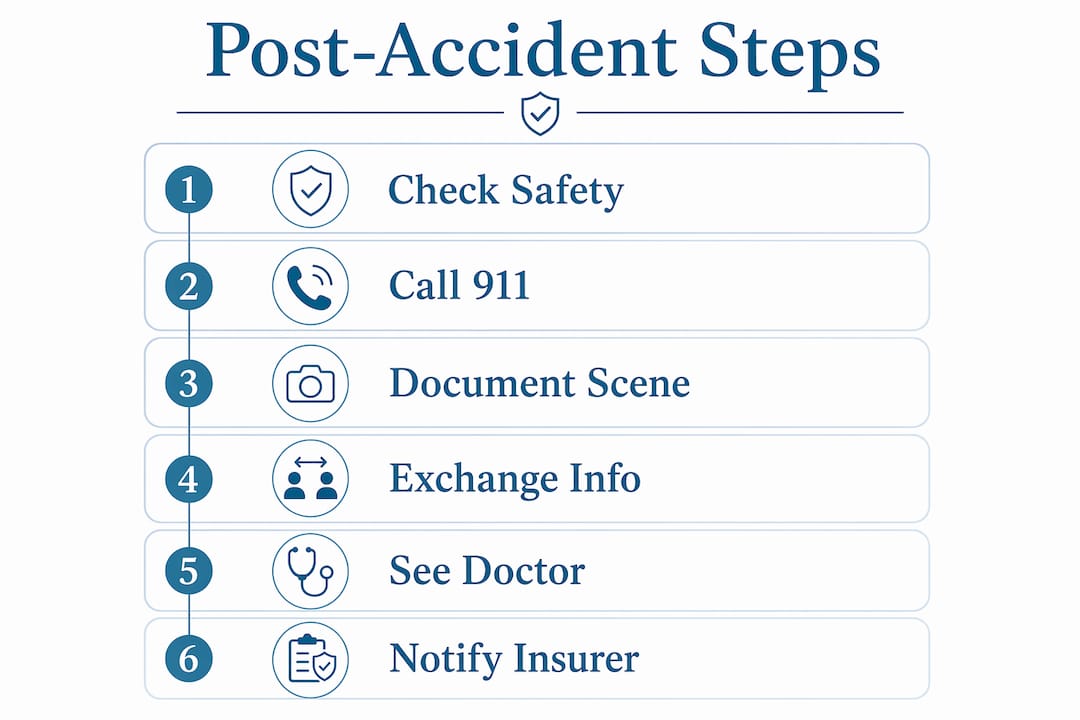
Here is what to do at the scene, in order:
- Check for injuries. Ask everyone involved if they are hurt. Do not move anyone who may have a spinal or neck injury unless there is immediate danger like fire.
- Call emergency services. Dial 112 in Spain or 911 in the United States. Report the location, number of vehicles, and whether anyone is injured.
- Do not move the vehicles. Vehicle positioning is crucial evidence for accident reconstruction and liability determination. Move them only if they create an active traffic hazard.
- Stay calm and say nothing speculative. Do not apologize, assign blame, or guess at what happened.
Pro Tip: If you are too shaken to remember these steps, keep a printed accident checklist in your glove compartment. Accidentsurvivalguide offers a free downloadable version at AccidentSurvivalGuide.com.
Why should you see a doctor within 72 hours?
Medical evaluation within 72 hours is not just good health advice. It is a legal requirement in Spanish jurisprudence to prove injury causality for insurance indemnification claims. Miss that window and an insurer can argue your injuries were not caused by the accident.
Many people feel fine immediately after a crash and skip the doctor. That is a serious mistake. Whiplash and cervical injuries often appear hours or days after impact, not at the scene. Adrenaline masks pain. By the time symptoms appear, the legal window may have closed.
Follow these steps for your medical evaluation:
- Go to the emergency room or urgent care the same day. Even if you feel fine, get checked. Tell the doctor you were in a car accident.
- Request all documentation. Ask for the emergency report, any imaging results (X-rays, MRI), and a written diagnosis. These medical records are essential evidence in legal and insurance processes.
- Follow up with your primary care doctor. A second visit creates a timeline that strengthens your claim.
- Report every symptom. Headaches, neck stiffness, back pain, dizziness, and difficulty sleeping are all relevant. Do not minimize them.
Pro Tip: Tell the doctor specifically that you were in a vehicle collision. A general complaint of "neck pain" without that context creates a weaker paper trail than a documented accident-related injury.
How do you document the accident scene effectively?
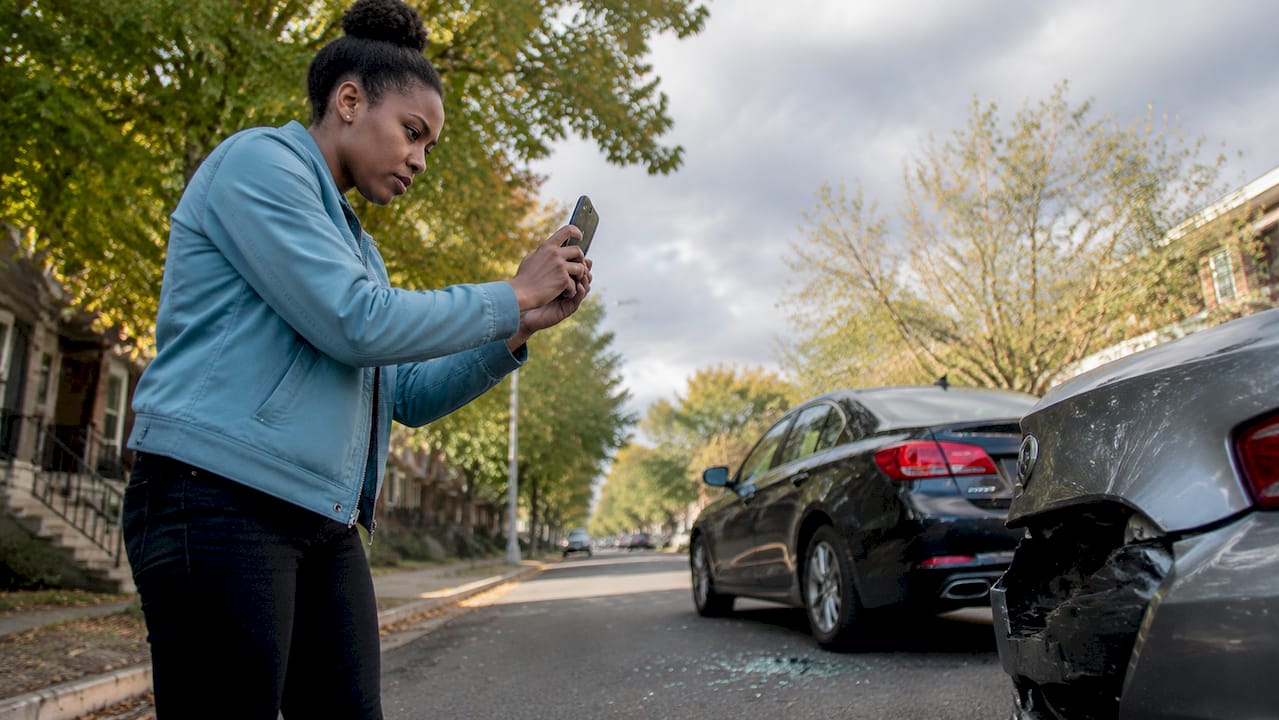
Strong documentation at the scene is the difference between a settled claim and a disputed one. Your smartphone is your most powerful tool in the first 15 minutes after a crash.
Take photos of everything before anything moves:
- Vehicle damage. Capture all four sides of every vehicle involved, including close-ups of impact points.
- License plates. Photograph every plate clearly.
- Road conditions. Document skid marks, debris, potholes, and any road signs or signals nearby.
- Weather and lighting. A wide shot showing the environment establishes context for the accident.
- Injuries. Photograph any visible injuries on yourself or others, with permission.
Beyond photos, gathering witness contact information strengthens your factual record significantly. Ask bystanders for their name and phone number before they leave the scene. Witnesses disappear fast.
The official police report, called the atestado in Spain, is the most important document you will collect. The atestado determines liability when parties disagree about what happened. Request it if there are injuries, significant damage, or any dispute about fault. Without it, your case rests entirely on your own evidence.
| Document | Purpose |
|---|---|
| Police report (atestado) | Establishes official facts and liability |
| Medical records | Links injury to accident for claims |
| Photographs | Visual proof of damage, conditions, and injuries |
| Witness statements | Independent corroboration of your account |
What information should you exchange and when do you call your insurer?
At the scene, exchange the following with every other driver involved:
- Full name and contact information
- Driver's license number
- Insurance company name and policy number
- Vehicle registration details
Do not go beyond this exchange. Admitting fault or apologizing at the scene gives insurance companies grounds to deny or reduce your compensation. Even a casual "I'm sorry" can be used against you. This is not about being cold. It is about protecting your rights.
| What to Do | What to Avoid |
|---|---|
| Exchange insurance and license info | Apologizing or admitting fault |
| Take photos before leaving | Moving vehicles unnecessarily |
| Call your insurer within 24–72 hours | Giving recorded statements without legal advice |
| Request the police report | Signing anything at the scene |
Notify your insurance company within 24–72 hours after the accident. Do it in writing, by email or certified letter, so you have a formal record. State the facts only: date, time, location, vehicles involved, and whether there were injuries. Do not speculate about fault.
If an insurance adjuster calls and asks for a recorded statement, decline until you have spoken with a lawyer. Legal experts consistently advise against giving recorded statements before legal consultation. Adjusters are trained to ask questions that produce answers that reduce your payout. You have the right to wait.
Pro Tip: Before calling your insurer, review what hiring a lawyer after a crash actually involves. Many people do not realize how early legal advice can change the outcome of a claim.
Key takeaways
The most effective post-accident action plan combines immediate scene safety, prompt medical evaluation within 72 hours, thorough documentation, and careful communication with insurers before any legal consultation.
| Point | Details |
|---|---|
| Secure the scene first | Use hazard lights, reflective vest, and V16 beacon before doing anything else. |
| See a doctor within 72 hours | Medical records within this window are legally required to link injuries to the accident. |
| Document everything on site | Photograph all vehicles, plates, road conditions, and gather witness contacts before leaving. |
| Notify your insurer in writing | Contact your insurance company within 24–72 hours with facts only, no fault admission. |
| Decline recorded statements | Never give a recorded statement to an adjuster before speaking with a legal professional. |
What i have learned after seeing thousands of accident cases
The single most damaging mistake I see people make is waiting to see a doctor. They feel okay at the scene, they drive home, and they think they got lucky. Three days later, they cannot turn their head. By then, the 72-hour window has closed, and the insurer has a clean argument that the injury happened somewhere else.
The second mistake is talking too much. People apologize out of reflex. They explain what they think happened. They answer every question the other driver asks. None of that helps you. It only creates a record that works against you later.
What actually works is simple: do less, document more. Take photos before you say a word to anyone. Get the police report even if the other driver says it is not necessary. Go to the emergency room even if you feel fine. Call your insurer within 24 hours, in writing, with nothing but the basic facts.
I also want to say this directly: the legal and insurance process after an accident is not designed to help you. It is designed to resolve claims efficiently, which often means paying out as little as possible. That is why timely legal consultation matters so much. Not because every accident needs a lawsuit, but because knowing your rights before you speak to an adjuster changes the entire conversation.
You do not need to be aggressive or confrontational. You just need to be informed and organized. That is what this guide is for.
— Scott
How Accidentsurvivalguide can help you right now
Accidentsurvivalguide was built by Scott Tischler and Kathy Carr after they navigated serious accidents themselves and realized how little clear guidance existed for everyday people. The platform is free and covers everything from medical documentation to insurance tactics to legal rights.
If you are not sure what your accident claim is worth, start with the free compensation calculator at Accidentsurvivalguide. It takes less than two minutes and gives you a realistic baseline before you speak to any adjuster. The site also connects you with experienced legal professionals nationwide who understand exactly what you are going through. You do not have to figure this out alone.
FAQ
What are the first steps to take after a car accident?
Check for injuries, call emergency services, turn on hazard lights, and do not move the vehicles. Follow the PAS protocol: Protect, Alert, and Help.
How soon do i need to see a doctor after an accident?
See a doctor within 72 hours. This window is legally critical in Spain to connect your injuries to the accident for insurance and compensation claims.
Should i admit fault at the accident scene?
Never admit fault or apologize at the scene. Insurance companies can use those statements to deny or reduce your compensation.
What documents should i collect after a car accident?
Collect the police report, medical records, photographs of the scene, and witness contact information. These four documents form the foundation of any insurance or legal claim.
When should i contact my insurance company after an accident?
Notify your insurer within 24–72 hours, in writing, with factual details only. Avoid giving recorded statements until you have spoken with a lawyer.